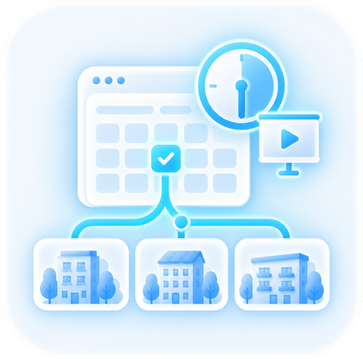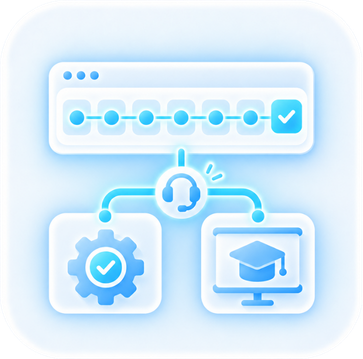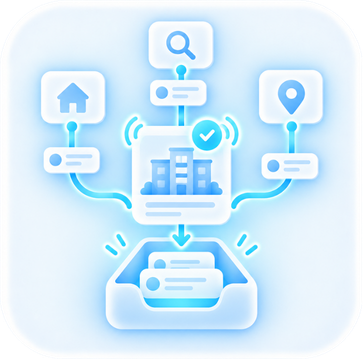
API Integration for portfolios with eight or more systems is the hidden tipping point that turns modest complexity into costly operational risk.
Once a portfolio crosses that threshold, disconnected workflows, duplicated data, and audit gaps grow fast without a deliberate integration strategy.
Why Eight Connected Technology Systems Becomes a Critical API Integration Threshold for Property Portfolios
- More integrations mean more failure modes. Each connection adds configuration and testing work.
- Point-to-point links scale poorly. N systems can create roughly N² connection paths.
- Data drift and duplicate records increase. Teams lose trust in reports and handoffs.
- Operational cost rises. Manual fixes and reconciliations consume staff time.
- Security and compliance risks multiply. More touch points widen attack surface and audit scope.
Business Benefits of a Deliberate API Integration Approach for Property Portfolios with 8-Plus Systems
- Faster leasing cycles from consolidated lead and applicant data.
- Lower vacancy risk through timely syndication and inquiry routing.
- Reduced manual work and fewer human errors.
- Clearer KPI tracking and reliable dashboards.
- Stronger security and consistent access controls.
API Integration Capabilities Checklist: Requirements for Property Portfolios from Technology Integrations
- RESTful APIs with consistent resource models and versioning support.
- Webhooks or event streams for real-time updates.
- Batch endpoints for bulk syncs and backfills.
- Idempotent operations and conflict resolution rules.
- Field-level schema mapping and canonical identifiers.
- OAuth2 or token-based auth with role-based access controls.
- Strong audit logs showing who changed what and when.
- Clear SLAs for latency, uptime, and support response times.
- Data export and portability guarantees for vendor changes.
How Strong API Integration Reduces Risk and Operational Overhead for Property Portfolios
- Automated syncs remove repetitive data entry and reconciliation.
- Unified tenant and listing records cut duplicate follow-ups.
- Real-time events let teams act faster on high-quality leads.
- Centralized logs simplify audits and incident response.
- Standardized APIs reduce onboarding time for new partners.
API Integration Implementation Roadmap for Property Portfolios with 8-Plus Connected Systems
- Assess current systems and map data owners and flows.
- Define canonical data model for tenants, listings, and transactions.
- Decide build versus buy using cost, time, and risk criteria.
- Select integration architecture: middleware, event hub, or direct APIs.
- Prototype with a high-value use case, like lead routing or tenant sync.
- Run a pilot on a subset of properties and monitor KPIs.
- Iterate, automate tests, and expand in controlled phases.
- Establish monitoring, alerts, and a runbook for failures.
API Integration Architecture Options and Trade-Offs for Large Property Management Portfolios
- Point-to-point: fast to start, costly to maintain at scale.
- iPaaS / middleware: centralizes logic, reduces connector work.
- Event-driven hub: best for real-time and decoupled systems.
- Data warehouse sync: good for analytics but not for real-time actions.
- Hybrid: combine real-time events with periodic bulk syncs.
Vendor Evaluation Criteria for PropTech API Integrations in Property Management Portfolios
- Prebuilt connectors to your core systems and marketplaces.
- Documentation quality and example payloads.
- Support model and SLA for onboarding and production incidents.
- Security posture, certifications, and data residency options.
- Data model flexibility and mapping tools for custom fields.
- Change management practices for versioned APIs.
- Pricing transparency for connectors, API calls, and scale.
- References from similar-size portfolios and use cases.
Measuring ROI and Tracking Success of API Integration in Property Management Portfolios
- Track vacancy days and conversion rates before and after integration.
- Measure time saved per listing and staff hours reduced.
- Monitor error rates and time spent on reconciliations.
- Audit lead response times and applicant journey completion.
- Use platform metrics to validate vendor claims and internal goals.
- Note: Leasey.AI customers report significant vacancy reduction and productivity gains.
Common API Integration Risks and Mitigation Steps for Property Management Portfolios
- Data mismatch risk. Mitigate with canonical IDs and field mapping rules.
- Downtime impact. Mitigate with retries, backfills, and circuit breakers.
- Vendor lock-in. Mitigate with data export and open formats.
- Security flaws. Mitigate with pen tests and least-privilege access.
- Cost overruns. Mitigate with staged pilots and usage caps.
Practical Next Steps for Property Management Decision-Makers Evaluating API Integration
- Inventory your systems and rank integration value by impact and effort.
- Start with a single automation that reduces vacancy or manual work.
- Choose an architecture that fits your scale and team skills.
- Define success metrics and an executive sponsor for the project.
- Request vendor demos that show live integrations and troubleshooting.
Choosing Between Building and Buying API Integration Capabilities for Property Management Portfolios
- Build if you need full control and have engineering bandwidth.
- Buy if you need speed, prebuilt connectors, and lower operational overhead.
- Consider hybrid models to keep core data under your control.
Final Recommendation: API Integration Strategy for Property Portfolios with 8-Plus Connected Systems
When your portfolio reaches eight or more systems, treat integration as strategic infrastructure.
Pick solutions that prioritize standard APIs, real-time events, and clear SLAs.
Start with a pilot that targets vacancy reduction or lead conversion.
Use measurable KPIs to guide expansion and vendor selection.
Definition and Scope of API Integration for Property Portfolios with 8-Plus Connected Systems
API integration in a property portfolio means automated, documented exchanges of leasing and property data between systems using RESTful APIs, webhooks, scheduled ETL, or message queues so systems can read, write, or react to events without manual re-entry. Common technical forms include synchronous REST calls for on-demand reads and writes. Asynchronous webhooks or queues handle event notifications and background syncs. Integrations must incorporate authentication (OAuth or API keys), transport encryption, rate limiting, and SLA and uptime expectations. At eight or more systems, the hidden trap is point-to-point wiring: dozens of bilateral connections become operationally unmanageable and brittle. A middleware or iPaaS layer that enforces a canonical data model, retries, field mapping, and central logging reduces that risk significantly. This strategy requires a documented data governance policy. It also requires a single source of truth for key objects like units, leases, and applicants before connecting more systems.
Scope and Common Systems for Integration
An integration is any automated data exchange that eliminates manual work: read-only syncs (listing pulls), writebacks (status changes from a CRM to a PMS), event hooks (application submitted triggers screening), SSO/OAuth identity links, or scheduled reconciliations with accounting. Leasing workflows most commonly integrate a Property Management System (PMS), CRM, listing syndication channels, tenant screening services, payment gateway providers, insurance partners, IoT and smart-lock platforms, and maintenance or work-order systems. Accounting and e-signature providers are frequent additions. Middleware/iPaaS should provide schema mapping, idempotent retries, rate‑limit handling, API gateway controls and centralized audit logs so integrations remain observable and maintainable. Immediate next step: run an “API inventory” to list endpoints, auth method, data owner, required latency, and minimum SLA for each system, allowing prioritization of the top 5 workflows for standardization.
Why Property Portfolios with 8-Plus Systems Struggle Without Strong API Integration Capabilities
Portfolios that stitch together eight or more platforms (PMS, CRM, listing syndication, tenant screening, scheduling, payments, reporting, etc.) accumulate operational risks including data silos, duplicate entry, inconsistent tenant records, delayed lead responses, frequent manual reconciliation, compliance gaps, and longer vacancy periods. As systems scale, point-to-point integrations multiply. This leads to routine issues like schema mismatches, rate limiting at API gateways, stale data from infrequent RESTful API polls, and missed Webhook events. Track lead-to-lease conversion weekly, measure time-to-first-response per lead, and count manual reconciliation hours per week to make the impact visible. Success requires clear data usage policies, defined SLAs and uptime targets, and strong authentication via OAuth alongside data security and encryption practices.
When Integration Failures Become Material
Integration problems become material when they change daily decision-making for a person or team: leasing directors see showings drop because listing syndication didn’t sync, operations staff spend most of a day reconciling tenant data between PMS and screening vendors, or the CTO is fielding repeated incident tickets about API rate limiting or broken OAuth flows. Adding niche point solutions can decrease overall efficiency unless you explicitly centralize data flows into a single source of truth or introduce middleware/iPaaS to manage transformations, retries, and error handling. Relying on CSV exports or manual fixes is a common hidden trap. Prioritize the top three business workflows (e.g., lead intake → screening → lease execution) and run an integration audit that documents each system’s auth method, endpoints, rate limits, data model differences, and SLA expectations; immediate next step – map those flows and implement middleware or an iPaaS for the highest-impact syncs.
Benefits of Robust API Integration for Large Property Management Portfolios: Efficiency, Data, and Experience
Robust API integration creates a single source of truth by routing property records between the Property Management System (PMS), CRM, tenant screening, and listing syndication services. It also routes lead and tenant records using RESTful APIs, Webhooks, and centralized middleware/iPaaS. Teams should instrument and report three weekly KPIs: days-vacant per unit, lead-to-lease conversion rate, and average onboarding time. This reporting should occur by emitting standardized webhook events and syncing them to the analytics store. Automated workflows (lead prequalification → showing scheduler → screening → lease generation) reduce manual steps and lower time-to-lease. These workflows also improve conversion when integrated with OAuth/authentication, API gateways, and rate limiting policies to protect integrations. Consideration: this requires clear data ownership rules, field-level mapping, and data security & encryption policies before automations are expanded.
How API-enabled Automation Translates to KPIs for Property Teams
Map each automated action to a measurable outcome: send a “lead-created” webhook at first contact and measure time-to-first-response (target under 10 minutes) to improve conversion; trigger automatic listing syndication and measure days-on-market weekly to reduce vacancy; and chain tenant-screening API calls into the workflow to shorten onboarding time and improve tenant quality. Centralize retries, rate limiting, and SLA & uptime monitoring using middleware or an API gateway. This centralization makes error rates, duplicate records, and reconciliation tasks visible to the CTO and regional managers. Hidden trap: avoid building many point-to-point connectors – they scale poorly and obscure which system is the single source of truth. Run an integration inventory: list every system, auth method (OAuth/keys), rate limits, and the canonical owner for each data domain. Then validate webhook delivery and retry behavior for your top three high-volume events.
Data‑Backed Risks & Thresholds for Portfolios with 8+ Systems
- Scale of Severity: Once a portfolio connects 8+ systems, orchestration complexity becomes critical – Leasey.AI customers report 20+ hours saved per listing after consolidation.
- Specific Stakeholder Benefit: Centralized APIs cut reconciliation work; Leasey.AI customers see 70% team productivity gains.
- Specific Stakeholder Benefit: Portfolio owners reduce vacancy periods (Leasey.AI case studies show 60% reduction), improving rental income and ROI.
- Hidden Trap: Building point-to-point connectors between 8+ systems creates brittle topology and high maintenance.
- Counter-Intuitive Insight: Introducing a single canonical API layer often reduces integration work and ongoing fixes versus many bespoke connectors.
- Specific Stakeholder Benefit: Centralized APIs provide auditable logs and access controls, simplifying SOC 2 or GDPR compliance for CTOs.
- Scale of Severity: Maintenance effort and vendor management costs escalate non‑linearly past eight integrations, forcing dedicated integration ownership.
- Hidden Trap: Procurement often accepts vague integration SLAs; require API rate limits, error budgets, and support SLAs up front.
Core API Capabilities and Protocols to Prioritize When Evaluating Property Management Technology Vendors
Require a vendor API that exposes RESTful API endpoints with consistent JSON schemas, webhooks or event streams for real-time updates, OAuth2-based authentication, clear data models and field-mapping documentation, idempotency for write operations, rate limiting with standard headers, explicit versioning, pagination and bulk endpoints, audit logs, and a sandbox/test environment with seeded data. API behaviors that prevent integration headaches include delivered webhooks with retry and dead-letter handling (reduces polling), idempotent POST/PUT semantics (prevents duplicate leases), stable schemas and a single source-of-truth mapping strategy (simplifies Data synchronization between PMS, CRM, listing syndication, and tenant screening systems), and encryption + API gateway support for secure traffic and predictable SLAs. Missing webhooks or sandboxes are red flags. Undocumented or inconsistent field names are also a concern. Lack of idempotency or retry semantics presents another issue. Opaque rate limits or no versioning policy should be noted. Absent audit logs are also a red flag. Consideration: this approach requires clear data usage and retention policies across teams before you map fields or centralize tenant data.
Integration Checklist: Specific API Behaviors to Demand
Demand each of the following and validate them during a short proof-of-concept: 1) Require RESTful endpoints that use standard HTTP verbs, predictable status codes, and sample payloads; 2) Require OAuth2 with short-lived access tokens plus refresh tokens and TLS 1.2+ for Data security & encryption; 3) Require webhooks/event streams that include delivery retries, delivery receipts, and idempotency keys; 4) Require bulk endpoints for batch sync, cursor-based pagination, and explicit rate-limit headers with soft/hard limits; 5) Require semantic versioning in the URL and a published deprecation timeline; 6) Require audit logs with user IDs, timestamps, and change reasons; 7) Require a sandbox environment with seeded PMS/CRM data and an API gateway or iPaaS-friendly webhook forwarding for mediation. Troubleshooting Tip: Run a two-week integration POC that exercises webhooks, idempotency, rate limits, and schema changes. Use the captured failures to create a prioritized vendor remediation list before signing an SLA.
API Integration Architectures and Patterns for Property Portfolio Scale: Middleware, iPaaS, and API Gateways
When a portfolio connects eight or more systems (PMS, CRM, listing syndication, tenant screening, analytics, etc.), the chosen architecture primarily determines reliability, observability, latency, and maintenance cost. Point-to-point RESTful API integrations and webhooks are simple to start but create combinatorial complexity as systems grow. Middleware or an iPaaS centralizes connectors, UI-driven data mapping, and managed orchestration to reduce maintenance and provide vendor SLAs and uptime guarantees. Microservices and an API gateway offer fine-grained control and stronger observability through distributed tracing and centralized logging. They also enforce rate limiting and OAuth policies, though they require engineering effort and increase deployment complexity. Consideration: this strategy requires a canonical data model and clear data usage and governance policies to avoid divergence and synchronization errors.
Specific Subheading Details
Use iPaaS when you need fast connector coverage, UI mapping, pre-built orchestrations, schema transformation, and managed retries with dead-letter queues and minimal in-house engineering. Choose native integrations or microservices when low-latency performance, custom business logic, or strict single-source-of-truth guarantees are required and you can support the operational overhead. At scale, centralize data mapping into a canonical model, enforce idempotent RESTful API design, and store transient messages in persistent queues. Implement exponential backoff retries and dead-letter queues, and place an API gateway in front of your services to enforce rate limiting, OAuth authentication, and TLS encryption. Require vendors to support webhooks and polling, exportable audit logs and traces, encryption in transit and at rest, configurable retry and dead-letter-queue semantics, documented SLAs and uptime guarantees, a connector roadmap, and the ability to run local transforms or custom hooks. Inventory your top 10 integration flows immediately. Record the required SLA and latency for each. Run a 6-week pilot (PMS + tenant screening) to measure end-to-end latency, error rates, and time-to-resolution.
Practical Benefits & Vendor Advantages Decision‑Makers Should Prioritize
- Specific Stakeholder Benefit: Leasing directors gain consistent listings across Facebook Marketplace, Zillow, Zumper, and Padmapper, reducing duplicate entries and manual posting.
- Specific Stakeholder Benefit: Automated lead prequalification boosts lead-to-lease conversion; Leasey.AI reports 150% improvement, reducing screening time for leasing teams.
- Specific Stakeholder Benefit: Showing scheduler and auto-booking save operations teams 20+ hours per listing, cutting admin and scheduling conflicts.
- Counter-Intuitive Insight: Integrating advanced screening partners (Discrepancy AI, Certn) detects fraud earlier, protecting rental income more than simple price or credit filters.
- Hidden Trap: Relying on manual document assembly causes lease delays; Leasey.AI’s auto-fill templates and e-signatures speed execution and reduce errors.
- Counter-Intuitive Insight: Choosing an API-first leasing platform reduces vendor lock-in and simplifies custom dashboards for CTOs, easing long-term integrations.
- Specific Stakeholder Benefit: Pre-built integrations (Certn, SingleKey, Apollo, Rental Beast) shorten deployment and lower custom connector costs for procurement teams.
- Specific Stakeholder Benefit: 24/7 AI inquiry response improves lead response times; Leasey.AI reports 400% improvement in lead conversion from automated replies.
How to Evaluate Vendors and Choose a Long-Term API Integration Partner for Property Portfolios
When a portfolio connects eight or more systems, integration becomes the operational backbone. Require automated data synchronization, a single source of truth, and centralized error handling to avoid manual reconciliation across PMS, CRM, listing syndication, and tenant screening systems. Evaluate vendors based on their API surface, including RESTful endpoints, Webhooks, OAuth/authentication, and SDKs. Also, assess documentation quality, sandbox parity, published rate limiting, API gateway behavior, SLA/uptime commitments, and data security certifications. Include transparent pricing for API usage, roadmap and deprecation windows, 24/7 support and escalation matrices, and formal change-management procedures that protect production data flows. Consideration: this strategy requires clear data usage policies and agreed canonical record ownership before integration work begins.
Specific Subheading Details
Checklist & questions to ask vendors: provide a versioned OpenAPI/RESTful API spec and sample SDKs; demonstrate an active sandbox with production-like data; show webhook delivery semantics (idempotency, retry policy, dead‑letter behavior); disclose exact OAuth token lifetimes and scopes; publish rate limiting and API gateway rules; provide security certification artifacts and encryption-at-rest/in-transit details; explain how integrations handle listing syndication and tenant screening data mappings; and state SLA & uptime terms with credits for breaches. Business/operational items to require: clear per-call and per-account pricing, documented roadmap with minimum deprecation notice, change-management process with test windows, recommended middleware / iPaaS patterns for orchestration, and an agreed single source of truth between PMS and CRM. Proof-of-concept tests to run: perform end-to-end create/update/delete syncs across a representative sample of properties to validate delta sync and conflict resolution; generate burst webhook traffic to observe throttling and capture median and 95th‑percentile latency; simulate auth failures and key rotation; and run a failure-recovery drill to measure practical error rate and mean time-to-remediation. Hidden trap: do not assume sandbox behaviour equals production – explicitly validate performance and rate limiting under load; Immediate next step: run a short PoC (two weeks) that executes these tests, feed logs into your monitoring stack, and publish dashboards for sync success rate, latency percentiles, error rate, and time-to-remediation so you can sign the contract only after KPIs meet your acceptance criteria.
API Integration Implementation Roadmap and Best Practices for Reliable Property Management Integrations
Begin with a discovery phase to map fields across your Property Management System (PMS), CRM, listing syndication, and tenant screening providers. This process will produce a canonical data model and schema version for all partners. Develop and test integrations in a sandbox using automated unit and end-to-end tests, consumer-driven contract tests, and one-way data-validation jobs before enabling write access. Use OAuth for authentication and Webhooks or RESTful API calls for event delivery. Roll out in stages using read-only syncs, canary deployments or feature flags, and explicit rollback paths to minimize downtime and hidden costs. Route traffic through an API gateway and apply rate limiting and retries with exponential backoff to avoid throttling. Govern with a published API version policy, change notifications to downstream teams, and a cadence for schema reviews. This approach reduces technical debt over time through continuous improvement, such as weekly post-mortems and monthly metrics reviews.
Operationalizing Monitoring, Security, and Team Governance
Assign an API owner for each integration and require a runbook that includes SLA and uptime targets, alert thresholds such as sync-lag exceeding a defined threshold in minutes, and on-call escalation steps. Instrument metrics for error rate, sync lag, and time-to-resolve, and route alerts to both an ops channel and your incident management system. Enforce least-privilege access for OAuth scopes. Encrypt data both in transit and at rest. Use middleware/iPaaS for token management, transformations, and schema-backed data synchronization to maintain a single source of truth. Consideration: this strategy requires clear data usage and retention policies across legal, ops and leasing teams to avoid compliance and privacy gaps. Hidden trap: teams often flip to full production writes too quickly – for leasing directors this can cause duplicate offers and confusion at scale, so run staged write-enable windows and reconcile nightly; immediate next step: provision a sandbox tenant and run a 48-hour dry-run sync, then validate mappings and fix any schema mismatches before a canary production rollout.