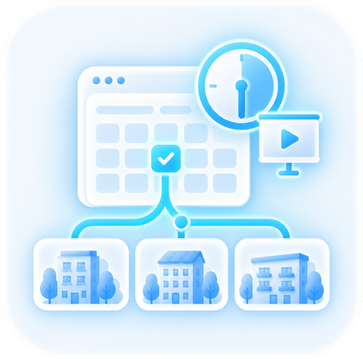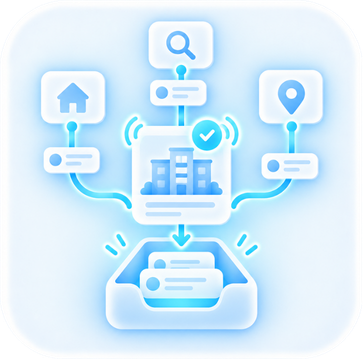
Your property management software handles operations. Leasey.AI fills vacancies faster.
- Syndicates your listings across 48+ rental marketplaces with one click — no manual reposting
- AI agents respond to every lead 24/7, qualify prospects, and book showings automatically
- Integrates directly with Buildium, AppFolio, DoorLoop, and Rent Manager
- Cuts vacancy periods from 45 days to under 7 without adding headcount
How We Evaluated These Platforms
Each platform was reviewed across six criteria based on publicly available information, vendor-published documentation, and third-party sources: feature breadth (accounting, maintenance, leasing, tenant communication), pricing transparency, portfolio size fit, implementation complexity, integration capabilities, and scalability. Pricing figures are based on publicly available information and vendor-published data as of early 2026 — always verify current pricing directly with each vendor before purchasing, as rates are subject to change.Finding the Right Software
No single “best” property management software exists — the optimal choice depends on your specific operational priorities, portfolio size, and growth plans.
Business Impact of Software Selection
Modern property managers often combine specialized tools with comprehensive platforms — for example, using Leasey’s leasing automation and listing syndication tools alongside Buildium or AppFolio to handle leasing workflows while maintaining accounting and operations in their primary system.
Comparison by Use Case
Each platform serves distinct operational priorities. This comparison highlights where each solution delivers maximum value based on portfolio size and primary business challenge.How to Use This Table
Step 1: Identify your primary operational bottleneck in the “Best For” column
Step 2: Check “Key Strengths” to verify the platform matches your specific needs
Step 3: Review “Primary Limitations” to ensure dealbreakers are not present
Note on geographic coverage: All platforms reviewed serve property managers throughout the United States, with varying depth of state-specific features for California, Texas, Florida, New York, and smaller markets.
| Platform (Category) | Best For | Portfolio Size | Starting Price (USD) | Key Strengths | Primary Limitations |
|---|---|---|---|---|---|
| Buildium Best All-in-One | Property managers needing comprehensive feature coverage across all operations | 20–1,000+ units | $58 USD/month (Essential) $183 USD/month (Growth) $375 USD/month (Premium) | Complete accounting suite, maintenance tracking, owner portals, HOA management, extensive reporting | Higher monthly cost, steeper learning curve, leasing-specific workflows are less specialized than dedicated leasing automation tools |
| AppFolio Best for Mid-Large Portfolios | Growing property management firms requiring scalable automation | 200+ units (minimum) | Custom pricing (est. $1.40–$2.00 USD/unit/month — verify with vendor) | AI-powered automation, mobile-first design, smart maintenance routing, predictive analytics, enterprise scalability | Premium pricing, 200-unit minimum, slower implementation, not suited to portfolios under 200 units as complexity and cost exceed the needs of smaller operators |
| DoorLoop Best Value Mid-Tier | Small-to-midsize firms wanting robust features without enterprise pricing | Up to 200 units | $69 USD/month (20 units) $149 USD/month (80 units) $299 USD/month (200 units) Verify current pricing with vendor | Transparent pricing, strong accounting features, responsive support, QuickBooks integration, owner portals | Newer platform with a smaller feature set than longer-established competitors; fewer third-party integrations currently available |
| Rent Manager Best for Complex Accounting | Property managers with sophisticated accounting requirements and multiple property owners | Flexible — any size | $2,500+ one-time license OR $60–120 USD/month subscription | Desktop software stability, extensive customization, deep accounting capabilities, offline functionality | Traditional desktop interface, steep learning curve, limited mobile functionality, higher upfront costs for perpetual license |
| Yardi Breeze Best Simplified Enterprise | Property managers wanting enterprise-level reputation with straightforward implementation | 100+ units (minimum) | Est. $1 USD/unit/month (100-unit minimum) Verify with vendor | Yardi ecosystem access, predictable per-unit pricing, easier implementation than Yardi Voyager, cloud-based | 100-unit minimum, fewer advanced features than Voyager, limited customization vs. full enterprise Yardi products |
| Innago Best Free Platform | Individual landlords and small operators testing the software | 1–50 units (ideal) | Free for landlords (tenant processing fees apply) | Zero landlord cost, online rent collection, tenant screening, maintenance tracking, lease management, mobile apps | Innago costs are shifted to tenants via transaction fees — evaluate total cost impact as your portfolio grows — basic accounting, limited reporting, fewer integrations than paid platforms |
| TurboTenant Best for DIY Landlords | Self-managing landlords with 1–10 properties seeking essential features at no cost | 1–10 units (ideal) | Free for landlords Premium screening: $55 USD | Free listing syndication, state-specific leases, online applications, basic accounting, educational resources | Very basic feature set, limited scalability, no owner reporting, minimal accounting depth |
Should Property Managers Use One Platform or Multiple Tools?
Benefits of a Single Property Management Platform
Single platforms provide consistent user interfaces, reducing training time and minimizing errors from switching between applications. Consolidated billing simplifies budget management, and support interactions become more efficient when one vendor handles all technical issues rather than requiring coordination between multiple providers.When Multiple Specialized Tools Outperform All-in-One Solutions
Specialized platforms typically excel in their focused domain — leasing automation tools process rental inquiries faster than general-purpose software, while dedicated accounting platforms offer deeper financial reporting than all-in-one solutions. This approach allows property managers to select best-in-class tools for each function rather than accepting average performance across all operations.What Are the Benefits of Combining Leasey.AI with Buildium or Yardi?
Modern property management operations increasingly combine comprehensive platforms with specialized tools to optimize workflow efficiency. A common example: property managers use their primary platform for accounting, maintenance, and owner reporting, while integrating a leasing automation tool like Leasey to handle listing syndication across 48 rental platforms and automated lead follow-up. Integration capabilities determine the viability of multi-tool strategies — platforms offering robust API connections and data export functionality enable seamless workflows.Choosing the Right Approach for Your Portfolio Size
Portfolio size and operational complexity guide the single-platform versus multi-tool decision. Individual landlords managing fewer than 20 units typically benefit from single-platform simplicity, as the efficiency gains from specialized tools rarely justify additional complexity. Mid-sized operations with 20–100 units should evaluate their primary operational bottleneck — if one specific function such as tenant placement or lease tracking consumes disproportionate time, supplementing a comprehensive platform with a specialized tool may deliver substantial value. Large property management firms with 100+ units and dedicated staff often benefit from multi-tool approaches, as specialized staff can master focused platforms while integration between systems maintains overall operational efficiency.Detailed Analysis: Buildium, AppFolio, DoorLoop, and Rent Manager
The following sections provide in-depth analysis of the four most widely adopted platforms across the mid-market and enterprise segments: Buildium, AppFolio, DoorLoop, and Rent Manager.Buildium: All-in-One Property Management Solution
Buildium Core Capabilities and Feature Overview
Buildium delivers comprehensive property management functionality covering accounting, maintenance coordination, tenant and owner communication, and HOA management. The platform serves property managers across portfolio sizes from 20 to 1,000+ units through tiered pricing that scales with operational needs. It is one of the most commonly recommended all-in-one platforms for full-service residential property management firms in the United States.Buildium’s Accounting Features
Buildium provides general ledger accounting, bank reconciliation, automated rent collection, late fee assessment, and owner disbursements through a unified accounting module. The platform generates financial statements, customizable reports, and 1099 tax forms for property owners. Multi-entity accounting allows property managers to track finances separately for different properties or ownership groups while maintaining consolidated reporting capabilities.How Buildium Handles Leases and Tenant Communication
Buildium automates lease creation using customizable templates, electronic signatures, and automatic lease renewal reminders. Tenant portals enable online rent payment, maintenance request submission, and document access. The platform tracks lease terms, rent escalations, and important dates while sending automated notifications for lease expirations and renewal opportunities — reducing the manual effort of vacancy management significantly.Maintenance Coordination
Buildium’s maintenance module allows tenants to submit work orders through the portal, automatically notifying property managers and assigned vendors. The system tracks work order status, vendor assignments, completion dates, and costs. Preventive maintenance scheduling helps property managers track recurring maintenance tasks and avoid emergency repairs through proactive asset management.Owner Portal and Reporting
Property owners access dedicated portals showing real-time financial performance, maintenance activities, and property-specific communications. Buildium generates automated monthly owner statements, customizable financial reports, and detailed transaction histories. The platform provides owner contribution tracking, distribution processing, and year-end tax documentation.Buildium Pricing Structure and Plan Tiers
Buildium charges tiered monthly subscriptions based on unit count and feature requirements. The Essential plan starts at $58 USD/month for basic functionality. The Growth plan costs $183 USD/month and adds owner portals, advanced reporting, and applicant screening. The Premium plan costs $375 USD/month and includes HOA management, custom reporting, and dedicated support. Additional per-transaction fees apply for tenant screening, rent processing, and electronic payments. Always verify current pricing at Buildium’s official pricing page.Buildium Implementation Timeline and Setup Requirements
According to vendor documentation and publicly reported user experiences, Buildium implementation typically requires approximately 20–40 hours for complete setup including chart of accounts configuration, property and unit data entry, owner account setup, and staff training. The platform offers guided setup workflows, implementation specialists, and extensive documentation. According to Buildium’s documentation and reported user experiences, data migration from existing systems typically requires additional time for data cleanup, mapping, and validation. Property managers should allocate 60–90 days for complete implementation and workflow optimization.Who Should Use Buildium
Buildium serves property managers requiring comprehensive functionality without enterprise pricing. The platform suits full-service property management firms handling accounting, maintenance, tenant placement, and owner reporting for multiple properties. Property managers with 20–500 units benefit from Buildium’s feature breadth without facing AppFolio’s 200-unit minimum or Yardi’s enterprise complexity.AppFolio: Enterprise Scalability for Growing Firms
How AppFolio Is Built and Why It Matters for Large Portfolios
AppFolio provides cloud-based software designed for growing firms requiring enterprise scalability. The platform emphasizes mobile-first design, AI-powered automation, and workflow optimization for high-volume operations. It is one of the most established names in enterprise-grade residential and commercial software.AI-Powered Automation
AppFolio integrates AI capabilities across multiple operational areas. The AI Leasing Assistant responds to prospect inquiries 24/7, answers common questions, and schedules property tours automatically. Smart Maintenance uses machine learning to route work orders to appropriate vendors based on issue type, location, and vendor specialty. Predictive analytics identify lease renewal likelihood, maintenance trends, and financial forecasting patterns based on historical data.How AppFolio’s Mobile App Works for Property Managers in the Field
AppFolio’s mobile-first architecture enables complete property management operations through iOS and Android applications. Property managers can conduct property inspections, capture photos, process maintenance requests, collect payments, and access financial reports through mobile devices. Tenants pay rent, submit maintenance requests, and communicate with property managers through mobile apps.Financial Management
AppFolio provides comprehensive accounting including general ledger, accounts payable and receivable, bank reconciliation, and automated financial close processes. The platform generates consolidated financial statements across portfolios, customizable owner reports, and detailed variance analysis. Advanced reporting capabilities include budget vs. actual comparisons, profitability analysis by property, and trend visualization.Tenant Screening and Leasing
AppFolio’s leasing workflow includes online applications, automated screening through TransUnion, electronic lease signing, and move-in coordination. The platform tracks leads through the entire leasing funnel, providing conversion analytics and identifying bottlenecks in the tenant placement process. Prospect portals allow applicants to schedule showings, submit applications, and track application status independently.Pricing Model
AppFolio charges custom per-unit monthly fees. AppFolio does not publicly list pricing. Per-unit monthly costs vary based on portfolio size, feature tier, and negotiation — contact AppFolio directly for a current quote. AppFolio has historically required a minimum portfolio size for new customers — verify current eligibility requirements directly with AppFolio’s sales team. Implementation fees range from $2,000 to $10,000+ USD based on complexity, data migration needs, and training requirements.Implementation Process
AppFolio implementation requires 40–80 hours including dedicated implementation specialist support, data migration, accounting configuration, workflow customization, and comprehensive staff training. The platform’s complexity benefits from a structured phased implementation: discovery and planning (1–2 weeks), data migration and configuration (2–4 weeks), testing and validation (1–2 weeks), and staff training and go-live support (1–2 weeks). Property managers should budget 60–120 days for complete implementation and workflow optimization.Best-Fit Scenarios
AppFolio serves growing property management firms with 200+ units and clear growth trajectories. The platform suits firms facing operational capacity constraints, requiring automation to scale without proportional headcount increases. Property managers prioritizing mobile operations, AI-powered efficiency, and enterprise-level financial reporting can justify AppFolio’s premium pricing through measurable operational efficiency gains.DoorLoop: Value-Focused Mid-Tier Landlord Software
Market Position
DoorLoop positions itself as a value-focused alternative to premium platforms, offering robust property management functionality at accessible pricing for small-to-midsize operations. The platform emphasizes transparent pricing, responsive customer support, and essential features without enterprise complexity.Feature Set
DoorLoop provides accounting functionality including general ledger, bank reconciliation, automated rent collection, and owner statements. Maintenance management includes tenant work order submission, vendor assignment, and completion tracking. Tenant screening integrates background checks, credit reports, and eviction history through TransUnion. Online rent payment accepts ACH transfers and credit cards through integrated payment processing.Accounting Capabilities
DoorLoop offers property-level accounting, owner distributions, late fee automation, and financial reporting through a straightforward interface designed for property managers without deep accounting expertise. The platform generates profit and loss statements, balance sheets, and cash flow reports. QuickBooks integration enables automated transaction syncing for property managers who prefer external accounting software.Owner Portal and Tenant Communication
Property owners access dedicated portals showing financial statements, maintenance activities, and property-specific information. DoorLoop generates automated monthly owner statements and provides real-time access to transaction histories. Tenant portals support online rent payment, maintenance request submission, and document access, with automated communication for rent reminders, late payment notices, and maintenance updates.Pricing Transparency
DoorLoop publishes fixed monthly fees based on unit count: approximately $69 USD/month for up to 20 units, $149 USD/month for up to 80 units, and $299 USD/month for up to 200 units as of early 2026. The pricing model includes all core features without tiered functionality restrictions. Transaction fees apply for tenant screening and online rent payment processing. Always verify current pricing at DoorLoop’s pricing page before committing.Implementation Requirements
DoorLoop implementation requires approximately 15–30 hours for setup, data entry, and basic training. The platform provides guided onboarding, video tutorials, and responsive customer support during implementation. Data migration from spreadsheets or existing software typically requires manual data entry or CSV imports rather than automated migration tools.Optimal Users
DoorLoop serves property managers with 20–200 units seeking comprehensive landlord software without enterprise pricing. The platform suits operators wanting accounting depth, owner reporting, and maintenance tracking in a single system while avoiding Buildium’s higher monthly costs or AppFolio’s 200-unit minimum. Property managers comfortable with streamlined interfaces and standard workflows benefit most from DoorLoop’s value proposition.Rent Manager: Deep Accounting for Complex Portfolios
Rent Manager’s Background and What Makes It Different
Rent Manager provides desktop-based property management software with a strong emphasis on accounting depth, customization capabilities, and operational control. The platform serves property managers requiring sophisticated financial management and those who prefer desktop software stability over cloud-based architectures.Accounting Sophistication
Rent Manager delivers advanced accounting functionality including multi-entity general ledger, complex owner structures, custom chart of accounts, and detailed financial reporting. The platform handles percentage-based management fees, tiered commission structures, complex owner distribution formulas, and sophisticated cost allocation across properties and owners. Financial reporting includes customizable statements, budget vs. actual analysis, and detailed variance reports suitable for CPA review and audit requirements.Customization Capabilities
Rent Manager allows extensive customization of forms, reports, workflows, and user interfaces through configuration rather than requiring development resources. Property managers create custom reports using built-in report writers, design specialized forms for specific operational needs, and configure automated workflows matching their unique business processes. This flexibility serves property managers with non-standard operations that don’t conform to rigid platform workflows.Desktop Architecture and Offline Functionality
Rent Manager operates as desktop software with optional cloud hosting, providing performance advantages for large data sets and complex accounting operations. Desktop architecture eliminates internet dependency for core operations, while optional web portals enable tenant and owner access. The platform supports both SQL Server and cloud-based database hosting, allowing property managers to choose infrastructure matching their technical capabilities and security requirements.Tenant, Lease, and Maintenance Management
Rent Manager manages lease terms, rent escalations, lease renewals, and tenant communications through desktop applications. Online tenant portals enable rent payment, maintenance requests, and document access through web interfaces. The platform generates leases, tracks important dates, and automates renewal notifications. Maintenance work order management, vendor coordination, and facilities tracking are included, with integration options for maintenance-specific platforms.Rent Manager Pricing Options: Subscription vs. Perpetual License
Rent Manager offers both perpetual licenses and subscription pricing. The perpetual license appeals to property managers preferring software ownership over ongoing subscription expenses, while subscription pricing provides lower upfront costs and included updates. Verify current pricing at Rent Manager’s official website.Implementation Complexity
Rent Manager implementation requires 30–60 hours for complete setup including accounting configuration, data migration, customization, and training. The platform’s sophistication and customization options create steeper learning curves compared to streamlined cloud platforms. Property managers benefit from certified consultant support during implementation to ensure proper accounting setup and workflow optimization.Target Audience
Rent Manager serves property managers requiring deep accounting capabilities, complex owner structures, or extensive customization. The platform suits firms with dedicated accounting staff, property managers handling multiple property owner entities with sophisticated distribution formulas, and operations requiring offline functionality or desktop performance for large data sets. Property managers prioritizing accounting depth over modern interface design find Rent Manager’s capabilities justify the learning investment.Yardi Breeze: Simplified Enterprise
How Yardi Breeze Fits Into the Broader Yardi Product Family
Yardi Breeze provides simplified software within the Yardi ecosystem, offering enterprise credibility with streamlined implementation compared to Voyager.Core Functionality
Yardi Breeze includes accounting, maintenance management, tenant and owner portals, and online rent collection through cloud-based architecture. The platform provides general ledger accounting, automated rent collection, late fee assessment, and owner disbursements. Maintenance tracking includes tenant work orders, vendor assignments, and completion monitoring. Financial reporting generates statements, owner reports, and operational analytics.How Yardi Breeze Compares to Voyager on Setup Time
Yardi Breeze emphasizes faster implementation compared to Voyager, requiring 20-40 hours for complete setup versus 80+ hours for enterprise Yardi products. The platform provides guided workflows, standardized configurations, and streamlined training materials. Implementation specialists support setup, data migration, and initial training without requiring extensive customization or configuration typical of Voyager implementations.Yardi Integration Benefits
Breeze users access Yardi’s vendor network, payment processing infrastructure, and screening services through established enterprise relationships. The platform integrates with RentCafe for online leasing, Yardi screening services, and payment processing through Yardi’s infrastructure. Property managers planning growth into Voyager benefit from Breeze’s compatibility and migration pathways within the Yardi ecosystem.Pricing Structure
Yardi Breeze charges $1 USD per unit per month with a 100-unit minimum, creating $100 USD/month minimum costs. Larger portfolios pay $200 USD/month for 200 units, $400 USD/month for 400 units, and scale linearly. This per-unit pricing provides cost predictability as portfolios grow. Additional fees apply for RentCafe integration, payment processing, and screening services.Feature Limitations
Breeze provides fewer advanced features compared to Voyager, including limited customization, standardized reporting, and reduced workflow flexibility. Property managers requiring extensive customization, complex owner structures, or sophisticated accounting configurations find Breeze limiting. The platform targets standard residential property management operations rather than complex commercial portfolios or highly specialized operational requirements.Implementation Timeline
Yardi Breeze implementation requires 20-40 hours including setup, data entry, configuration, and training. The platform’s streamlined approach reduces implementation complexity compared to Voyager but requires more time than mid-market alternatives like DoorLoop. Property managers should budget 30-60 days for complete implementation including data migration, testing, and staff training.Who Should Use Yardi Breeze: Best Fit for 100+ Unit Operators Entering the Yardi Ecosystem
Yardi Breeze serves property managers with 100+ units seeking Yardi ecosystem access without enterprise complexity or pricing. The platform suits firms planning eventual Voyager migration as portfolios grow, property managers requiring enterprise-level vendor relationships, and operations prioritizing brand recognition in competitive markets. Property managers with standard residential operations benefit from Breeze’s balance of functionality and accessibility.Innago: Free Platform Leader
Innago Business Model: Free for Landlords, Tenant-Paid Transaction Fees
Innago operates a freemium model charging landlords zero subscription fees while generating revenue through tenant transaction fees. This model eliminates cost barriers for small landlords testing software adoption while providing legitimate functionality beyond free-tier limitations on competing platforms.Innago Core Features for Small Landlords
Innago provides online rent collection, tenant screening, maintenance request tracking, lease management, and basic accounting through web and mobile applications. The platform enables digital lease signing, automated rent reminders, late fee assessment, and tenant communication. Accounting features include income and expense tracking, basic financial reports, and 1099 generation.Rent Collection
Innago processes online rent payments through ACH transfers and debit cards. Tenants pay transaction fees ranging from $3.95 USD for ACH to 3.5% for credit cards rather than landlords absorbing processing costs. This tenant-paid model enables free landlord usage while generating platform revenue. Automated rent reminders, late fee assessment, and payment tracking reduce collection friction.Tenant Screening
Innago integrates tenant screening through TransUnion, providing credit reports, criminal background checks, and eviction history. Screening costs apply per applicant rather than through monthly subscriptions. Online applications, customizable screening criteria, and automated applicant notifications streamline the screening workflow.Maintenance Management
Innago enables tenants to submit maintenance requests through the portal, automatically notifying landlords. The platform tracks request status, assigns work orders, and maintains communication histories. While lacking sophisticated vendor management features of paid platforms, Innago’s maintenance functionality serves basic tracking needs for small landlords.Accounting Limitations
Innago provides basic accounting including income and expense categorization, but lacks depth for complex financial reporting or multi-owner accounting. The platform generates simple profit and loss statements and tracks property-level finances but cannot handle sophisticated owner distributions, complex cost allocation, or advanced financial analysis. Landlords requiring detailed accounting should supplement Innago with QuickBooks or similar accounting software.When Landlords Outgrow Innago
Innago serves landlords with 1-50 units but becomes cost-prohibitive at larger scales due to per-transaction fees. Landlords with 50+ units often find tenant transaction fees exceed costs of paid platforms offering unlimited transactions. Property managers with complex accounting needs, multiple staff members, or sophisticated reporting requirements quickly outgrow Innago’s capabilities.Implementation Simplicity
Innago implementation requires 5-10 hours for property setup, tenant data entry, and basic configuration. The platform provides straightforward interfaces designed for non-technical users, minimal configuration options, and quick onboarding. Landlords can begin basic operations within hours rather than weeks typical of enterprise platforms.Who Should Use Innago: Best Fit for Independent Landlords with 1–20 Units
Innago serves individual landlords with 1-20 properties testing software adoption without financial commitment. The platform suits self-managing landlords with straightforward operations, minimal accounting requirements, and preference for simplicity over advanced features. Innago provides legitimate value for small landlords while avoiding free-tier limitations that render competing “free” platforms unusable.TurboTenant: DIY Landlord Focus
TurboTenant Market Positioning: Free Tools for Self-Managing Landlords
TurboTenant targets self-managing landlords with 1-10 properties seeking essential property management features without cost. The platform emphasizes educational resources, simplicity, and accessibility for new landlords entering property management.TurboTenant Essential Features for DIY Landlords
TurboTenant provides free listing syndication to rental marketplaces, online rental applications, tenant screening, electronic lease signing, rent collection, and basic accounting. The platform maintains landlord-pays-zero pricing while generating revenue through optional paid services and tenant transaction fees.Listing Syndication
TurboTenant syndicates property listings to Zillow, Trulia, HotPads, and additional rental marketplaces automatically. This free syndication provides market exposure equivalent to paid listing services. The platform includes listing optimization tools, photo uploads, and property description templates designed for landlords without marketing expertise.Screening Services
TurboTenant offers free basic screening (tenant-paid) and premium screening for $55 USD per applicant (landlord-paid). Premium screening includes credit reports, criminal background checks, eviction history, and income verification through TransUnion. Online applications, customizable screening criteria, and automated communications streamline the tenant selection process.Lease Management
TurboTenant provides state-specific lease templates, electronic signature capabilities, and automatic lease renewal reminders. The platform stores signed leases, tracks important dates, and maintains tenant documentation. While lacking sophisticated lease analysis or complex term handling, TurboTenant’s lease functionality serves basic landlord requirements.Accounting Capabilities
TurboTenant offers very basic accounting including rent tracking, expense categorization, and simple financial reports. The platform lacks depth for sophisticated financial analysis, multi-property consolidated reporting, or complex owner accounting. Landlords requiring detailed financial management should use dedicated accounting software alongside TurboTenant.Educational Resources
TurboTenant emphasizes landlord education through guides, templates, and instructional content covering tenant screening, lease creation, security deposits, evictions, and property management basics. These resources serve new landlords learning property management fundamentals while using the platform.Scalability Limitations
TurboTenant serves landlords with 1-10 properties but lacks functionality for scaling operations. The platform provides no owner portals for managing multiple property owners, limited staff collaboration features, and basic reporting unsuitable for professional property management firms. Landlords growing beyond 10 units typically migrate to platforms offering greater sophistication.Implementation Process
TurboTenant implementation requires 2-5 hours for property setup, listing creation, and basic configuration. The platform’s simplicity enables quick onboarding without extensive training or technical expertise. Landlords can begin listing properties and collecting applications within hours of signup.Who Should Use TurboTenant: Best Fit for 1–5 Unit DIY Landlords
TurboTenant serves new landlords with 1-5 properties seeking free property management tools with educational support. The platform suits self-managing landlords prioritizing simplicity over advanced features, operators testing property management software without financial commitment, and landlords with straightforward operations requiring only essential functionality.Why Property Managers Use Software
Operational Efficiency Gains
Property management software automates time-consuming manual tasks including rent collection, payment reminders, late fee assessment, and tenant communications. Automated workflows reduce administrative time by 40-60% compared to manual processes using spreadsheets and email. Property managers reallocate saved time to higher-value activities including property acquisition, tenant relationship management, and strategic planning rather than repetitive administrative tasks.Financial Accuracy and Reporting
Software platforms maintain accurate financial records through automated transaction recording, bank reconciliation, and error-checking validation. Automated accounting reduces bookkeeping errors by 70-80% compared to manual entry systems prone to data entry mistakes and transposition errors. Real-time financial reporting enables proactive decision-making through immediate access to property performance metrics, expense trends, and profitability analysis rather than waiting for monthly manual report compilation.Tenant Satisfaction Improvements
Online portals enable tenants to pay rent, submit maintenance requests, and access documents 24/7 without requiring property manager availability. Automated maintenance request routing reduces response times from days to hours, improving tenant satisfaction and retention rates. Electronic communication maintains documentation trails, reduces miscommunication, and provides transparency improving tenant relationships.How Property Management Software Enables Portfolio Scaling Without Adding Staff
Software platforms enable property managers to scale operations without proportional staff increases through automation and workflow optimization. Growth from 50 to 200 units requires minimal additional staff when supported by appropriate software compared to doubling or tripling headcount for manual operations.Owner Communication and Transparency
Owner portals provide real-time financial performance visibility, eliminating time-consuming monthly report preparation and distribution. Automated owner statements, on-demand financial reports, and transparent communication reduce owner inquiries by 60-70% while improving owner satisfaction through accessible information. Professional reporting enhances property manager credibility and supports business development through demonstrated operational sophistication.Compliance and Documentation
Property management software maintains comprehensive documentation of tenant communications, maintenance activities, financial transactions, and compliance activities required for legal protection and regulatory requirements. Automated lease renewal tracking, security deposit management, and required notice generation reduce compliance risks. Centralized documentation enables quick retrieval of historical information for disputes, audits, or legal proceedings.How Property Management Software Improves Competitive Position
Property managers using software platforms compete more effectively through faster tenant placement, superior owner reporting, and operational efficiency enabling competitive pricing. Prospective clients increasingly expect software-enabled capabilities including online portals, automated communications, and sophisticated reporting. Property managers without software face growing disadvantages in competitive markets where clients compare operational sophistication across multiple firms.Evaluating Your Software Options
Portfolio Assessment for United States and Canadian Markets
Portfolio size, property types, ownership structures, and geographic distribution fundamentally impact appropriate platform selection. Individual landlords with 5 units require different tools than firms managing 500 units across multiple owners. Single-family residential properties demand different functionality than multifamily communities with amenities and common areas. Simple ownership structures enable straightforward platforms while complex owner partnerships require sophisticated accounting and reporting capabilities. Geographic distribution creates additional complexity for US property managers operating across multiple states. A firm managing properties in California, Texas, and Florida faces three different regulatory environments with varying notice requirements, security deposit rules, and eviction procedures. Multi-state US operators should prioritize platforms offering state-specific lease templates and compliance tracking, while single-state operators can weight these features lower. Canadian property managers face similar considerations across provincial boundaries, particularly between provinces with stricter tenancy regulations (British Columbia, Ontario) and those with more flexible frameworks (Alberta). In provinces like BC and Ontario, where rent control and specific eviction forms (such as Ontario’s N4) are strictly enforced, choosing a platform that natively supports these regional requirements is critical for legal compliance.Calculate Total Cost of Ownership
Comprehensive cost analysis includes subscription fees, transaction costs, implementation expenses, training time, and ongoing support requirements. Free platforms charging tenant transaction fees often cost more than paid platforms at scale. In the 2026 regulatory environment, landlords must also account for transparency requirements, ensuring software can accurately disclose total monthly rental prices inclusive of mandatory fees to remain compliant with updated consumer protection standards. Implementation time represents significant hidden costs—platforms requiring 80 hours for setup consume $2,000-4,000 USD in staff time at typical property manager hourly rates. Property managers should project three-year total costs including all fees, implementation, and supplementary tools required when platforms lack essential features.Evaluate Implementation Capacity
Available time, technical expertise, and change management capabilities impact successful platform adoption. Simple platforms requiring 10 hours for implementation suit time-constrained small operators while complex platforms demanding 60+ hours require dedicated implementation resources. Technical complexity considerations include comfort with cloud-based systems, API integrations, data migration requirements, and ongoing maintenance needs.Plan for Future Growth
Platform selection should accommodate current operations while supporting growth trajectories over 3-5 years. Property managers planning rapid expansion should select scalable platforms avoiding disruptive platform migration within 18-24 months. Conversely, selecting enterprise platforms while managing 20 units creates unnecessary complexity and cost. Balanced selection matches current operational needs while providing headroom for reasonable growth without forcing premature platform switching.Property Management Software Availability Across the United States
United States and Canadian Market Coverage
United States Platform Support
Buildium, AppFolio, DoorLoop, Rent Manager, Yardi Breeze, Innago, and TurboTenant all serve property managers throughout the United States without geographic restrictions. US-specific functionality across these platforms includes:- IRS 1099 reporting: Automated 1099-MISC generation for annual property owner disbursements
- US credit bureau integration: Tenant screening through TransUnion, Equifax, and Experian
- ACH payment processing: Direct bank transfers through US banking infrastructure
- State-specific lease templates: Availability varies by platform—verify coverage for your state during trial evaluation, particularly for states with complex landlord-tenant regulations
Canadian Platform Support
Most platforms reviewed serve Canadian property managers, though localization depth varies more significantly than US coverage:- Provincial lease templates: Ontario and British Columbia typically have strongest coverage; verify availability for Alberta, Quebec, and other provinces
- Canadian credit reporting: Integration with Equifax Canada and TransUnion Canada
- Canadian payment processing: Interac, EFT, and credit card processing in CAD—availability varies by platform
Cross-Border Considerations
Property management firms operating in both the United States and Canada require platforms supporting multi-currency accounting and jurisdiction-appropriate documentation for both countries. Most enterprise platforms (AppFolio, Yardi Breeze, Buildium) handle cross-border operations effectively, while free platforms may have limitations in Canadian functionality.Platform Accessibility
Cloud-based platforms (Buildium, AppFolio, DoorLoop, Yardi Breeze, Innago, TurboTenant) provide access through web browsers, iOS applications, and Android applications without installation requirements. Desktop platforms (Rent Manager) require Windows installation but offer optional cloud hosting enabling remote access. Mobile application capabilities vary significantly—full-featured mobile apps enable complete property management operations while limited mobile access provides only basic functionality requiring desktop access for complex tasks.User Account Management
Multi-user capabilities enable team collaboration through separate logins with customizable permissions. Enterprise platforms support unlimited users while entry-level platforms limit concurrent users or charge per additional user. Role-based permissions control access to financial data, tenant information, and administrative functions protecting sensitive information while enabling appropriate staff access. Property managers with multiple team members should verify user management capabilities and associated costs during platform evaluation.API and Integration Access
Application Programming Interface (API) access enables integration with third-party tools, custom reporting, and automated data synchronization. Enterprise platforms typically provide robust API capabilities supporting sophisticated integrations. Mid-tier platforms offer selective API access for common integrations. Entry-level platforms rarely provide API access, limiting integration flexibility. Property managers requiring integration with accounting software, marketing platforms, or specialized tools should verify specific integration capabilities before platform selection.Data Export and Portability
Data export capabilities enable backup creation, analysis in external tools, and platform migration flexibility. Comprehensive platforms provide CSV exports, formatted reports, and bulk data extraction capabilities. Limited platforms restrict data export creating vendor lock-in through data portability barriers. Property managers should verify export capabilities including transaction data, tenant information, financial records, and historical communications before committing to platforms with limited data portability.Customer Support Availability
Support channels, response times, and availability hours vary significantly across platforms. Enterprise platforms typically provide phone support, email support, live chat, and dedicated account representatives during business hours. Mid-tier platforms offer email and chat support with response times ranging from hours to days. Free platforms provide limited support through help documentation, community forums, and email-only channels with extended response times.Software Integration Ecosystem
Accounting Software Integration
QuickBooks integration enables property managers preferring external accounting systems to maintain financial data outside property management platforms. Mid-tier platforms (DoorLoop, Buildium) provide direct QuickBooks synchronization through API connections, automatically transferring transactions and maintaining synchronized records. Property managers using separate accounting systems should verify integration depth including chart of accounts mapping, transaction categorization, and bank reconciliation capabilities.Leasing Workflow Optimization
Property managers focused on efficient tenant placement often supplement comprehensive platforms with specialized leasing automation tools. These complementary systems handle marketplace syndication, inquiry response, showing coordination, and prequalification workflows more efficiently than general-purpose platforms. This integration approach enables superior leasing performance without disrupting existing operational workflows.Maintenance Management Platforms
Specialized maintenance platforms provide advanced work order management, vendor networks, and facilities tracking beyond capabilities of property management software. Integration between property management platforms and maintenance systems enables centralized financial tracking while leveraging specialized maintenance functionality. Property managers with extensive maintenance operations or complex facilities management needs benefit from specialized maintenance platforms integrated with property management accounting.Payment Processing Selection
Payment processing integration impacts transaction costs, tenant experience, and operational efficiency. Most platforms include integrated payment processing but some enable selection of preferred payment processors for competitive rates. Property managers should compare platform-included processing costs against independent processor alternatives, evaluating both transaction fees and monthly minimums. High-volume operations may achieve lower costs through independent processors integrated with property management platforms.Marketing and Listing Services
Marketplace syndication capabilities determine rental listing reach and tenant lead generation. Some platforms provide native syndication to major rental marketplaces while others require supplementary listing services. Property managers should verify syndication reach including Zillow, Apartments.com, Realtor.com, and regional rental marketplaces relevant to their markets. Supplementary listing services may provide enhanced syndication justifying additional costs for high-vacancy markets or competitive rental environments.Integration Implementation
Successful integration requires technical setup, workflow configuration, and ongoing maintenance. Some integrations operate automatically through API connections requiring minimal setup while others demand manual data export/import workflows. Property managers should assess technical complexity, ongoing maintenance requirements, and potential workflow disruptions before implementing complex integration strategies.Common Questions About Property Management Software
Which property management software works best for small landlords?
TurboTenant serves new landlords through free listing syndication, screening services, and educational resources. These platforms enable small landlords to automate basic operations without financial commitments, transitioning to paid platforms only when transaction fees exceed subscription costs or advanced features become necessary.Can I switch property management software after starting?
Property managers can switch platforms but should plan for substantial implementation effort including data migration, workflow reconfiguration, and staff retraining. Switching costs include implementation time (20-80 hours depending on complexity), temporary productivity losses during transition periods, and potential data migration challenges when platforms use incompatible formats. Property managers minimize switching costs by exporting comprehensive data from existing systems, conducting parallel operations during transition periods, and allocating adequate implementation time. Strategic platform selection considering 3-5 year needs reduces likelihood of requiring disruptive platform switching.Do property management platforms integrate with other software?
Integration capabilities vary significantly across platforms. Enterprise systems (AppFolio, Yardi, Buildium) offer native accounting modules eliminating external integration needs. Mid-tier platforms (DoorLoop) provide QuickBooks integration through direct API connections. Property managers often combine platforms to optimize specific workflows—for example, using specialized tools alongside comprehensive systems. Leasey.AI works with software like Buildium, AppFolio, and Yardi for property managers wanting to enhance leasing automation while maintaining their existing accounting and operations platforms. Property managers requiring specific integrations should verify capabilities before platform selection.How long does implementation take?
Implementation time ranges from 5 hours for simple platforms to 80+ hours for enterprise systems. Simple platforms (Innago, TurboTenant) require 5-15 hours for setup, data entry, and basic training. Mid-tier platforms (DoorLoop, Buildium) require 20-40 hours for complete implementation including data migration, accounting configuration, and team training. Enterprise platforms (AppFolio, Yardi) require 40-80 hours for comprehensive implementation with dedicated specialists. Budget additional time for workflow testing, refinement, and ongoing support during the first 30-90 days of use.Do small portfolio owners need software?
Yes, even small landlords benefit from property management software. Free platforms eliminate cost barriers while providing substantial value through online rent collection, digital tenant screening, and automated payment reminders. Landlords managing just 3-5 properties save 2-5 hours monthly through rent collection automation alone—representing $100-250 in time savings at typical hourly rates. Tenant screening through software platforms costs $30-50 per applicant versus $50-100 through standalone screening services. The question becomes which platform matches your needs rather than whether you need software at all.What features matter most?
Essential features vary by operational focus. For leasing-focused landlords: marketplace syndication reach, automated inquiry response, showing scheduling, and tenant screening depth matter most. For financially-focused property managers: accounting depth, owner reporting capabilities, bank reconciliation tools, and tax documentation matter most. For maintenance-focused operations: work order tracking, vendor management, tenant communication tools, and mobile access matter most. Identify your time-consuming bottlenecks before evaluating platform features—the features addressing your primary pain points deliver the highest value regardless of generic “best features” lists.How do I know when to upgrade to paid software?
Upgrade triggers include: transaction fees exceeding potential subscription costs (typically occurs at 30-50 units), needing advanced features like owner portals or detailed financial reporting that free platforms do not provide, managing multiple team members requiring collaboration features, growing beyond basic operational needs into complex accounting requirements, or experiencing customer support limitations on free tiers.Do These Platforms Support Fair Housing Act Compliance for U.S. Landlords?
All major property management platforms provide infrastructure supporting compliance for US property managers, including standardized application workflows, consistent tenant screening processes, and documentation trails. Key compliance-supporting features include: uniform applicant evaluation criteria applied consistently across all applications, automated record-keeping of screening decisions and communications, and marketing tools designed for non-discriminatory advertising. However, software provides compliance infrastructure—not compliance itself. Property managers remain responsible for configuring screening criteria appropriately, applying policies consistently, and ensuring their practices meet federal, state, and local fair housing requirements. US property managers in jurisdictions with protected classes beyond federal requirements (such as source of income protections) should verify platform configuration flexibility during evaluation. Consider consulting with a fair housing attorney when establishing screening criteria, regardless of which platform you select.Making Your Software Selection Decision
Start With Operational Bottlenecks
The most effective selection process begins with honest assessment of where time and money currently drain from operations. Property managers spending majority of hours on vacancy filling require different tools than those focused on complex accounting for multiple property owners. Identifying the primary operational bottleneck—whether leasing, accounting, maintenance, or reporting—guides platform evaluation toward solutions excelling in critical areas rather than providing merely adequate performance across all functions.Match Complexity to Portfolio Size
Portfolio size fundamentally impacts appropriate platform complexity and cost tolerance. Individual landlords managing fewer than 10 properties typically cannot justify $200-400 monthly software costs when free alternatives provide essential functionality. Conversely, large property management firms with 200+ units operating on thin margins per door benefit dramatically from premium platforms delivering substantial efficiency gains through advanced automation and analytics.Plan for Implementation Reality
Implementation success depends equally on platform capabilities and adoption execution. The most sophisticated software delivers minimal value when users receive inadequate training, data migration creates system inaccuracies, or change management fails to achieve team buy-in. Property managers should allocate substantial time and attention to implementation phases, treating software adoption as process transformation rather than simple technology purchase.Final Recommendations by Portfolio Type for US and Canadian Operators
For property managers requiring comprehensive all-in-one platforms, Buildium provides the best combination of feature breadth, established user base, and accessible pricing across portfolio sizes from 20 to 500+ units. The platform’s accounting depth, maintenance tracking, owner reporting, and HOA capabilities serve full-service property management firms without requiring multiple specialized tools. For growing mid-market firms with 200+ units, AppFolio’s AI-driven automation, mobile-first design, and enterprise scalability justify premium pricing through operational efficiency gains and capacity expansion without proportional staff increases. For budget-conscious landlords testing software adoption, Innago and TurboTenant eliminate financial barriers through free core functionality while providing legitimate value through automated rent collection, tenant screening, and basic accounting that exceed spreadsheet capabilities. For property managers prioritizing leasing efficiency, specialized automation tools work alongside comprehensive platforms to optimize tenant placement workflows. Leasey.AI integrates with platforms like Buildium, AppFolio, and Yardi for property managers wanting enhanced leasing automation while maintaining their existing accounting and operations systems. For US and Canadian property managers alike, these recommendations apply regardless of geographic location. The platforms reviewed serve both markets effectively, though US property managers should verify state-specific lease template availability and Canadian property managers should confirm provincial feature support during trial evaluations. The question facing property managers today extends beyond which software ranks “best” in generic comparisons. The critical question becomes which platform aligns with your specific operational priorities, portfolio characteristics, growth trajectory, and implementation capacity—because the right software for a 5-unit independent landlord differs fundamentally from optimal solutions for 500-unit professional property management firms.
Other Property Management Software resources:
- 4 Top Property Management Software for Commercial Real Estate
- Optimal Property Management Software Solutions for the Smaller Scale Landlords
- What are the most User Friendly Property Management Software in 2023
- Detailed Look at Short-Term Rental Property Management Software Solutions
- What is the Top Rental Management Accounting Tool
- Navigating the Galaxy of Property Management Apps