Leasey.AI

Common Technology Solutions in Property Management as a Service

October 10, 2025

Streamline Your Application Process

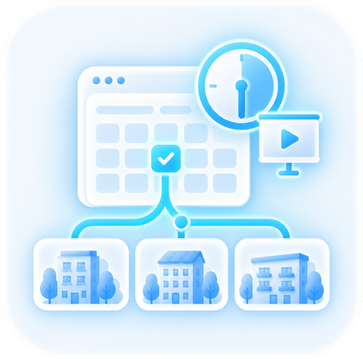
Digital Tenancy Applications: Send digital tenancy applications to your leads and gain access to comprehensive screening data for each applicant

How Technology Transforms Modern Property Management Operations

Market Growth and Digital Adoption Rates

Technology Readiness Assessment

Have you considered how much time your team wastes on manual rent collection and maintenance coordination each month? Property Management as a Service leverages cloud-based software, artificial intelligence, and Internet of Things sensors to automate rent collection, tenant screening, maintenance coordination, and compliance tracking. The global property management software market reached $24.18 billion in 2024 and projects growth to $52.21 billion by 2032. Common technology solutions include cloud platforms for centralized operations, AI-powered tenant screening systems, predictive maintenance through IoT sensors, automated communication tools, and integrated financial reporting dashboards that improve efficiency while reducing operational costs.

Evaluate Your Digital Readiness

Before selecting technology platforms, assess your current operational maturity:

  1. ☐ Staff spends more than 15 hours weekly on manual rent collection, lease processing, or maintenance coordination tasks
  2. ☐ Portfolio exceeds 25 units or includes multiple property types requiring different management approaches
  3. ☐ Current systems lack real-time visibility into vacancy rates, maintenance status, or financial performance metrics
  4. ☐ Tenant complaints about slow response times exceed 10% of monthly communication volume
  5. ☐ Compliance tracking across multiple jurisdictions consumes significant administrative resources without centralized documentation
Three or more checked items indicate substantial ROI potential from technology adoption within 14-18 months of implementation.

Core Technology Categories Reshaping Operations

Primary Solution Types

According to market research from Fortune Business Insights, North America accounts for 35.53% of the global property management software market, with 68% of property managers now utilizing some form of digital platform. The technology landscape divides into four primary categories: cloud-based management platforms providing centralized operations control, artificial intelligence systems automating tenant screening and communication, Internet of Things sensor networks enabling predictive maintenance, and integrated financial analytics dashboards delivering real-time portfolio performance insights. Each category addresses specific operational pain points while creating compound efficiency gains through platform integration.

Benefits Driving Property Manager Technology Investment

Quantifiable Operational Improvements

Property managers adopting comprehensive technology solutions report measurable improvements across key performance indicators. Response time to maintenance requests decreases from 48-72 hours to 6-12 hours through automated ticketing and IoT monitoring. Rent collection efficiency improves by 35-40% via automated payment processing and digital reminders. Tenant screening accuracy increases to 92-99.8% through machine learning algorithms analyzing 37+ data points compared to manual reviews examining 3-5 basic criteria. Administrative time allocation shifts from 65% tactical tasks to 45% strategic activities, enabling portfolio growth without proportional staffing increases. These improvements compound over time as systems learn patterns and optimize workflows based on historical performance data.

Selecting Cloud Platforms That Match Portfolio Complexity

Platform Categories by Portfolio Size and Type

Portfolio-Based Selection Framework

How do you determine whether enterprise features justify three times higher costs for your 75-unit portfolio? Platform selection should align with portfolio complexity rather than feature maximization. Research shows property managers with portfolios under 50 units who adopted enterprise-level platforms experienced 34% higher implementation costs and six-month longer adoption timelines compared to those using specialized solutions. For portfolios under 25 units managing single property types, specialized platforms like Innago or TenantCloud offer targeted functionality at $40-$80 monthly without unnecessary complexity. Mid-market portfolios of 25-150 mixed-use units benefit from integrated platforms such as Buildium or Propertyware providing comprehensive features at $200-$400 monthly with scalable add-ons. Enterprise portfolios exceeding 150 units or managing complex compliance requirements require robust solutions like Yardi Systems or RealPage offering advanced customization, multi-property hierarchies, and dedicated support at $800-$1,500 monthly subscriptions.

Integration Requirements and System Compatibility

Connecting Existing Software Systems

Successful cloud platform adoption requires seamless integration with existing accounting software, banking systems, and customer relationship management tools. According to research from PropertyMe, 63% of cloud-based property management solutions now offer API connections enabling automated data synchronization across multiple platforms. Property managers should verify integration capabilities with QuickBooks, Xero, or Sage accounting systems before platform commitment. Banking integration through Plaid or similar services enables automated rent collection, expense tracking, and reconciliation without manual data entry. Modern property management platforms also connect with communication tools, enabling centralized tenant messaging across email, SMS, and in-app channels. Integration reduces duplicate data entry by 80-90% while improving accuracy through single-source-of-truth architecture that eliminates conflicting information across disconnected systems.

Mobile Access and Remote Management Features

Field Operations Through Mobile Applications

Cloud-based platforms deliver full management capabilities through mobile applications, enabling property managers to conduct inspections, approve maintenance requests, collect rent payments, and communicate with tenants from any location. Research from Grand View Research indicates that mobile functionality adoption increased property manager productivity by 40% in 2024 through elimination of office-dependent workflows. Mobile apps provide photo documentation for property inspections with GPS timestamps and automated report generation. Maintenance technicians receive work orders directly on mobile devices with property access codes, tenant contact information, and equipment specifications. Tenants access self-service portals for rent payment, maintenance requests, and lease document retrieval, reducing administrative inquiries by 45-50%. Real-time synchronization ensures all stakeholders view current information regardless of device or location, supporting hybrid work models and geographically distributed property portfolios.

Leveraging Artificial Intelligence in Tenant Screening and Communication

Machine Learning Tenant Screening Systems

Advanced Data Analysis for Applicant Evaluation

Artificial intelligence transforms tenant screening from basic credit checks to comprehensive risk assessment analyzing 37+ data points across 27 disparate sources. AI-powered screening platforms cross-reference credit history, rental payment patterns, eviction records, employment verification, utility payment history, and even social media presence to generate reliability scores with 92-99.8% accuracy. Property managers utilizing AI screening report 47-78% reduction in eviction rates and $3,200 average annual savings per unit through improved tenant selection. Consider a scenario where manual screening approved an applicant with acceptable credit score and employment verification, but AI analysis detected discrepancies between stated income and lifestyle indicators across social profiles, preventing a high-risk placement. According to PWC research, AI improves data accuracy by 80% while reducing screening time from 72 hours to 45 minutes through automated verification processes that eliminate human error and unconscious bias.

AI Chatbots for 24/7 Tenant Support

Automated Communication and Issue Resolution

Natural language processing enables AI chatbots to handle routine tenant inquiries without human intervention, providing instant responses to frequently asked questions about rent payment, maintenance procedures, lease terms, and amenity access. Chatbots integrated with property management systems access real-time data to provide personalized responses including payment due dates, maintenance request status, and account balances. Modern AI chatbot systems resolve 60-70% of tenant inquiries autonomously while escalating complex issues to human staff with full conversation context. Response time improvements from hours or days to seconds significantly increase tenant satisfaction scores by 25-35% while reducing administrative workload on property management teams. Chatbots also schedule property tours, process rental applications, and send automated reminders for lease renewals or payment deadlines, creating consistent communication that prevents issues before they require intervention.

Predictive Analytics for Occupancy and Retention

Data-Driven Forecasting and Strategy

Machine learning algorithms analyze historical occupancy patterns, market trends, seasonal fluctuations, and tenant behavior data to forecast vacancy rates and identify retention risks months in advance. Predictive analytics systems flag tenants with 70%+ probability of non-renewal based on payment patterns, maintenance request frequency, lease term approaching, and engagement metrics, enabling proactive retention outreach. Analytics dashboards reveal optimal pricing strategies by comparing unit-level performance against market rates, competitor availability, and demand forecasting. Property managers using predictive analytics reduce vacancy periods by 18-25% through strategic marketing timing and targeted pricing adjustments. AI systems also identify units requiring preventive maintenance before tenant complaints arise, predict seasonal staffing needs based on historical request volumes, and optimize portfolio-level resource allocation by forecasting cash flow with 85-90% accuracy three to six months ahead, supporting strategic planning and investment decisions.

Reducing Costs Through IoT-Enabled Predictive Maintenance

IoT Sensor Networks for Real-Time Equipment Monitoring

Continuous Asset Performance Tracking

IoT sensors function like an early warning system for your property, detecting subtle changes in temperature, vibration, pressure, and energy consumption before they become expensive emergencies. Sensors installed on HVAC systems, water heaters, refrigeration units, and mechanical equipment transmit real-time performance data to cloud-based analytics platforms that identify anomalies indicating potential failures. Temperature sensors detect gradual efficiency decline in cooling systems weeks before tenant complaints arise, while vibration sensors on motors and pumps reveal bearing wear or misalignment requiring intervention. According to Deloitte research on smart buildings, properties implementing comprehensive IoT monitoring reduce overall maintenance costs by 10-30% through early detection and intervention. Milwaukee-based property firm AssetFlow reduced maintenance response time from 48 hours to six hours after implementing IoT sensor networks across their 180-unit portfolio in 2023, enabling immediate technician dispatch when sensors trigger threshold alerts.

Predictive Algorithms That Forecast Maintenance Needs

Machine Learning Failure Prediction

Predictive maintenance algorithms analyze sensor data patterns to forecast equipment failures weeks or months before occurrence, enabling scheduled repairs during convenient timeframes rather than emergency response. Machine learning models process historical failure data, operating conditions, environmental factors, and usage patterns to calculate remaining useful life estimates for critical equipment with 85-90% accuracy. Automated maintenance scheduling systems generate work orders when predictive models indicate intervention thresholds, preventing 70-80% of emergency repairs through proactive replacement or service. AssetFlow saw maintenance costs drop from $847 per unit annually to $612 per unit – a 28% reduction – while tenant satisfaction scores increased from 72% to 89% through elimination of unexpected equipment failures and uncomfortable temperature fluctuations. The financial impact extends beyond direct repair savings to include reduced tenant turnover, fewer emergency service premiums, and extended equipment lifespans through optimal maintenance timing.

Energy Management and Environmental Control Systems

Optimizing Utility Costs Through Smart Building Technology

IoT-enabled energy management systems automatically adjust heating, cooling, and lighting based on occupancy patterns, weather forecasts, and utility rate schedules, reducing energy consumption by 15-25% without compromising tenant comfort. Smart thermostats learn usage patterns and pre-condition spaces before occupancy while gradually reducing energy during low-activity periods. Occupancy sensors prevent heating or cooling vacant units, and lighting systems dim or deactivate in unoccupied common areas. Property managers with documented IoT monitoring systems and predictive maintenance protocols receive 12-18% lower insurance premiums due to reduced risk profiles and demonstrated proactive asset management. Energy optimization also supports ESG reporting requirements and green building certifications increasingly demanded by institutional investors and environmentally conscious tenants. The combination of reduced utility costs, maintenance savings, and insurance premium reductions typically generates ROI on IoT sensor investments within 18-24 months for properties exceeding 50 units.

Calculating Technology Investment Costs and Expected Returns

Five-Year Total Cost of Ownership Comparison

Cloud Versus On-Premise Cost Analysis

Five-year total cost of ownership reveals substantial differences between cloud-based platforms and legacy on-premise systems. For a representative 50-unit portfolio, cloud-based solutions cost $8,400-$14,600 total over five years including monthly subscriptions ($120-$220 monthly), implementation services, training, and integration. On-premise legacy systems cost $31,200-$47,800 for the same period including server hardware ($8,000-$12,000), software licenses ($6,400-$9,600), IT staff allocation ($12,800-$19,200), and ongoing maintenance. Cloud platforms eliminate hardware depreciation, reduce IT staffing requirements, and provide automatic updates without additional licensing fees. Subscription pricing models offer predictable monthly expenses with scalability to add units without infrastructure investment. The cost differential increases dramatically for larger portfolios where on-premise systems require dedicated servers, redundant storage, and full-time IT personnel while cloud solutions scale through per-unit pricing with minimal marginal cost increases.

Hidden Implementation Costs and Timeline Expectations

Beyond Subscription Fees

Technology implementation requires budget allocation beyond monthly subscription costs that many property managers underestimate during vendor selection. Implementation time averages 120-240 hours for comprehensive platform deployment, translating to 2.4-4.8 hours per unit for initial setup including data migration, workflow configuration, and user account creation. Staff training costs $2,400-$4,800 for comprehensive certification programs covering all platform features, best practices, and troubleshooting procedures. Integration services connecting accounting software, banking systems, and existing databases cost $3,600-$8,400 depending on API availability and data complexity. Professional implementation support reduces deployment timeline by 30-40% and prevents costly configuration errors that create workflow inefficiencies. Property managers should budget 15-20% of first-year software costs for implementation, training, and integration to ensure successful adoption and minimize disruption during transition periods.

ROI Breakeven Points by Technology Category

Payback Period Calculations

Return on investment timelines vary by technology category and portfolio characteristics but typically achieve breakeven at month 14-18 for mid-market cloud platforms. ROI calculation divides total implementation costs by monthly operational savings to determine breakeven timeline. A 50-unit portfolio spending $12,000 on cloud platform implementation and generating $750 monthly savings through reduced staff time, improved rent collection, and decreased vacancy periods reaches breakeven at month 16. AI tenant screening systems achieve faster ROI at month 8-12 through eviction prevention and reduced turnover costs. IoT predictive maintenance requires longer payback at month 18-24 due to higher sensor deployment costs but generates larger ongoing savings through maintenance cost reduction and insurance premium benefits. Property managers should establish baseline metrics including staff hours allocated to manual tasks, vacancy rates, maintenance costs per unit, and rent collection efficiency before implementation to accurately measure post-adoption improvements and verify projected ROI assumptions against actual performance gains.

Avoiding Technology Adoption Mistakes Through Phased Implementation

Creating Phased Rollout Timeline for Staff Adoption

Twelve to Eighteen Month Implementation Strategy

Why do 67% of technology implementations fail to meet ROI expectations within 24 months? Research synthesizing findings from multiple industry studies reveals that failed implementations lack three critical factors: phased rollout over 12-18 months, dedicated change management resources, and established baseline performance metrics. Successful adoption divides implementation into three phases rather than simultaneous full-stack deployment. Phase one (months 1-6) focuses on communication and tenant-facing tools including online portals, payment processing, and maintenance request systems. Phase two (months 7-12) implements operational platforms covering lease management, vendor coordination, and document storage systems. Phase three (months 13-18) activates advanced analytics, predictive tools, and portfolio-level reporting dashboards. Phased approaches allow staff to master each technology category before adding complexity, prevent overwhelming simultaneous training demands, and enable course correction based on early-phase feedback before full deployment.

Change Management Strategies That Reduce Resistance

Building Staff Buy-In Through Participation

Technology adoption success depends more on change management execution than platform capabilities, yet property management firms allocate 80% of budgets to software and only 20% to adoption support. Designating technology champions from each department who receive advanced training and provide peer support reduces resistance by creating internal expertise and trusted resources. Weekly implementation team meetings tracking progress against milestones, addressing staff concerns immediately, and celebrating adoption wins maintain momentum and visibility. Running parallel systems for 30-60 days during transitions allows staff to verify new platform accuracy against familiar processes, building confidence before full cutover. Developing standard operating procedures documenting new workflows before deprecating old manual processes ensures knowledge capture and provides reference materials for ongoing training. Organizations investing in structured change management report 63% higher staff adoption rates and 45% faster proficiency development compared to technology-only implementations.

Integration Testing and Data Migration Protocols

Ensuring System Reliability Before Launch

Data migration from legacy systems or spreadsheets to new platforms represents the highest risk phase of technology implementation, requiring rigorous testing protocols to prevent operational disruption. Comprehensive data audits identifying incomplete records, inconsistent formatting, and duplicate entries before migration reduce post-launch errors by 70-80%. Test migrations using 10% of total data reveal formatting issues, missing fields, and integration problems before full deployment. Parallel operation periods running old and new systems simultaneously for 30-60 days enable accuracy verification while maintaining operational continuity if migration issues arise. Schedule 90-day post-implementation reviews measuring actual performance against baseline metrics and ROI projections to identify gaps, optimize workflows, and address persistent staff challenges. Create ongoing feedback loops for staff to report bugs, suggest improvements, and request additional training on specific features, supporting continuous optimization beyond initial deployment and ensuring platforms evolve with operational needs.

Maximize Rent Collection Efficiency

Automated Rent Collection and Reminders: Simplify your rent collection process with automated invoicing, payment processing, and tenant reminders

Realize Value Overnight

Leasey.AI provides a seamless implementation experience — your personal Leasing Assistant will onboard your properties and get your account up and running, so you can start enjoying the benefits of automation instantly.