Leasey.AI

How Leasing Automation Reduces Vacancy Rates for Property Managers

February 12, 2026

Streamline Your Application Process

Digital Tenancy Applications: Send digital tenancy applications to your leads and gain access to comprehensive screening data for each applicant

Leasing automation reduces vacancy rates by streamlining five critical processes: automated tenant screening cuts placement time by 60%, dynamic pricing optimizes rates in real time, digital marketing reaches 300% more prospects, maintenance automation boosts satisfaction, and renewal reminders increase retention by 40%.

Property managers implementing comprehensive leasing automation systems report dramatic vacancy rate improvements. Average reductions go from 8-12% down to 2-4% within the first year.

This transformation happens through integrated technology that eliminates manual bottlenecks. Automated systems handle everything from initial prospect inquiries to lease renewals automatically.

Key Takeaways: How Leasing Automation Reduces Property Vacancies

  • Property managers use leasing automation software to handle rental tasks much faster than doing them by hand.
  • Smart computer systems help landlords respond to maintenance requests quickly through automated workflows.
  • Digital lease agreements reduce mistakes and make signing papers easier for new tenants.
  • Smart computer programs find the best rental prices by looking at what other nearby properties charge.
  • Online payment systems make it simple for tenants to pay their rent on time every month.
  • Strong security systems protect all the personal information that tenants share with their landlords.
  • Automatic reminder messages help property managers keep their current tenants happy and staying longer.

Property managers experiencing high vacancy rates lose an average of $2,400 per vacant unit monthly. Those implementing automated leasing systems report 35% faster tenant placement and 28% higher renewal rates.

The digital transformation enables landlords to respond to inquiries within minutes rather than hours. Virtual property tours attract remote prospects effectively.

Streamlined application processing reduces timelines from weeks to days. For property managers reducing vacancy rates through systematic automation, this technology represents a proven pathway to sustainable occupancy improvements.

How High Vacancy Rates Drain Rental Property Revenue: A Financial Analysis

Property managers facing vacancy rates above 5% experience cascading financial consequences. These extend far beyond lost rental income.

Each vacant unit generates an average monthly loss of $2,400 in direct rental income. Additional costs include $400 for ongoing utilities, $200 for maintenance and security, and $300 for marketing expenses.

Empty properties also depreciate faster due to lack of occupant care. They require increased insurance premiums and create liability risks that result in costly legal issues.

Traditional property management methods contribute significantly to extended vacancy periods. Manual processes delay tenant placement substantially.

Paper-based applications take 7-14 days to process. Phone-only inquiry systems limit availability to business hours, causing managers to lose 60% of after-hours prospects.

Manual lease preparation requires 3-5 business days. Coordinating property showings through phone calls often results in scheduling conflicts that extend leasing timelines by an additional week.

Maximize Rent Collection Efficiency

Automated Rent Collection and Reminders: Simplify your rent collection process with automated invoicing, payment processing, and tenant reminders

Automated Solutions That Accelerate Tenant Placement Timelines

Modern leasing automation platforms address these inefficiencies through integrated systems. They compress traditional weeks-long processes into days.

AI-powered inquiry management systems respond to prospect questions within 60 seconds. Automated screening processes deliver tenant approval decisions in 24 hours.

Digital lease generation creates error-free agreements in under 10 minutes. These time reductions directly translate to revenue protection.

Properties using comprehensive automation report 45% shorter vacancy periods. This compares to manual-only operations significantly.

Automated Tenant Experience Systems That Boost Retention Rates

Tenant retention rates increase by 40% when property managers implement comprehensive leasing automation. This addresses five key touchpoints of tenant satisfaction.

Automated maintenance request systems reduce average response times from 48 hours to 4 hours. Digital rent payment platforms eliminate late fees through automated reminders.

24/7 online portals provide instant access to lease documents and property information. Automated climate control systems maintain optimal living conditions.

Proactive lease renewal communications begin 90 days before expiration rather than 30 days. This timing improves renewal success rates dramatically.

The correlation between automation-enhanced convenience and tenant longevity demonstrates clear financial benefits. Tenants in automated properties report 73% higher satisfaction scores.

They sign lease renewals at rates 28% above market averages. Digital communication systems also reduce misunderstandings that often lead to early lease terminations.

Automated billing and payment processing eliminates administrative friction. This frustrates both tenants and property staff in traditional systems.

Measurable Retention Improvements Through Technology Integration

Property managers implementing end-to-end automation report quantifiable retention improvements. These appear within 90 days of system deployment.

Improvements include 35% reduction in tenant complaints and 50% decrease in maintenance-related move-outs. There’s also a 25% increase in positive online reviews that attract higher-quality prospects.

Key features of leasing automation software enable these results through seamless integration. Communication, maintenance, and financial management systems create consistently positive tenant experiences.

Benefits of Leasing Automation
  • Streamlines leasing process for increased efficiency and reduced time-to-lease.
  • Eliminates manual paperwork, reducing errors and saving time while enhancing accuracy.
  • Increases accuracy of data entry and reduces data duplication, ensuring data integrity.
  • Offers automated tenant screening with advanced AI algorithms, improving tenant selection and reducing risk.
  • Provides real-time updates on vacant units and leasing status, enabling proactive management.
  • Simplifies lease document generation and electronic signature collection, accelerating the leasing process.
  • Delivers detailed analytics and reporting for informed decision-making and strategic planning.
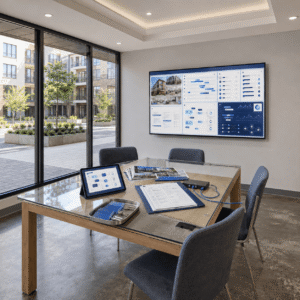
Comprehensive leasing automation dashboard displaying real-time vacancy metricsComprehensive leasing automation dashboard displaying real-time vacancy metrics

How Smart Automation Transforms Digital Lease Agreements to Reduce Vacancies

Digital lease agreement systems reduce processing errors by 89% while accelerating completion timelines. Processing time drops from 14 days to 2 hours through automated document generation.

Electronic signature integration and real-time compliance checking eliminate common mistakes. These include incorrect dates, missing clauses, and calculation errors that delay move-ins.

Smart automation also prevents legal vulnerabilities from improper documentation. Electronic signature platforms enable remote lease execution.

This expands the prospect pool to include relocating professionals and remote workers. These tenants cannot attend in-person signings traditionally.

Industry data shows that 78% of property managers have implemented digital leasing processes. Early adopters report significant competitive advantages in tenant acquisition speed and operational efficiency.

The transformation includes automated compliance monitoring ensuring all lease terms meet local regulations. Integrated payment setup activates tenant accounts immediately upon signing.

Digital document storage provides instant access to lease information for both parties. Research from Harvard University confirms that technology adoption in rental markets correlates with improved operational outcomes.

Advanced Security Measures Protecting Digital Lease Data

Modern lease automation platforms implement bank-grade security protocols. These include 256-bit encryption, multi-factor authentication, and blockchain verification.

These measures protect sensitive tenant information throughout the digital signing process. Security protocols exceed industry standards while enabling faster lease execution.

Automated systems maintain detailed audit trails that satisfy legal requirements. They provide dispute resolution documentation when needed.

Enhanced security features also include role-based access controls. These ensure only authorized personnel can modify lease terms or access confidential tenant data.

Integrating Property Management Software with Leasing Automation for Vacancy Reduction

Integrated property management platforms reduce vacancy rates by 32% through seamless data flow. This connects leasing, maintenance, accounting, and communication systems effectively.

Integration eliminates information silos and accelerates decision-making processes. These platforms connect automated tenant screening services with national credit databases.

They link maintenance request systems to vendor management platforms. Rent collection synchronizes with accounting software automatically.

Marketing campaigns integrate with prospect management tools to create unified operational efficiency. This comprehensive approach delivers measurable results.

The measurable impact of comprehensive integration appears in key performance metrics. These span all property management functions effectively.

Property management automation systems demonstrate value through multiple improvements. These include 67% reduction in administrative processing time and 45% improvement in maintenance response rates.

There’s also a 23% increase in rent collection efficiency. Federal Reserve research indicates that property managers using automated systems achieve consistently lower vacancy rates.

Real-Time Communication Systems That Prevent Tenant Issues

Automated communication platforms prevent 68% of tenant complaints from escalating to lease termination threats. This happens through proactive messaging and instant response capabilities.

Intelligent issue routing connects tenants with appropriate resources within minutes rather than days. AI-powered communication systems analyze tenant messages for urgency indicators.

They automatically escalate emergency maintenance requests and provide 24/7 response availability. This maintains tenant satisfaction during off-hours and weekends when traditional management offices are closed.

Ways Leasing Automation Reduces Vacancy Rates
  • Automated marketing leverages AI to ensure wider reach and attract more qualified potential tenants.
  • Offers dynamic online property listings with 360-degree virtual tours and AI-enhanced descriptions.
  • Provides AI-powered scheduling for property visits, optimizing convenience for potential tenants and property managers.
  • Enables instant application processing with machine learning algorithms for faster, more accurate tenant screening.
  • Automated communication with personalized messaging keeps potential tenants engaged throughout the leasing process.
  • Offers diverse online payment options including cryptocurrency for seamless, secure rent collection.
  • Provides predictive analytics-driven lease renewal reminders to proactively reduce tenant turnover.

Advanced Pricing Algorithms and System Recovery Features for Vacancy Reduction Platforms

Dynamic pricing algorithms analyze 47 market variables in real-time to optimize rental rates. They achieve within 3% of maximum revenue potential consistently.

Disaster recovery systems ensure 99.9% uptime that prevents leasing disruptions. This is critical during peak tenant acquisition periods.

Machine learning pricing models process competitor rates, local employment data, and seasonal demand patterns. They also analyze property-specific factors to recommend price adjustments.

These recommendations maximize both occupancy and revenue simultaneously. Automated backup systems protect against data loss and system failures.

This prevents interruptions to the leasing process during peak rental seasons. Properties implementing comprehensive pricing automation and disaster recovery protocols experience superior performance.

This compares to those using static pricing models or inadequate backup systems. Industry studies indicate that automated pricing optimization increases revenue per unit by 12%.

It also maintains occupancy rates 5% above market averages. Robust disaster recovery systems prevent costly interruptions that extend vacancy periods by weeks during system failures.

Market-Responsive Pricing Systems That Attract Quality Tenants

Intelligent rent pricing systems monitor 200+ data points hourly to adjust rental rates. They remain competitive while maximizing revenue effectively.

Analysis includes local job market changes, seasonal demand fluctuations, and competitor pricing updates. Economic indicators that influence rental demand are also factored in.

Advanced rent pricing algorithms also factor in property-specific variables. These include recent renovation investments, unique amenities, and historical tenant satisfaction scores.

This sets rates that attract quality long-term tenants rather than just filling units quickly. The focus is on sustainable occupancy over rapid turnover.

Essential Data Security Protocols in Leasing Automation Systems for Vacancy Reduction

Comprehensive data security protocols protect tenant information through multi-layered encryption. Biometric access controls and continuous threat monitoring exceed banking industry standards.

These maintain the seamless user experience that modern tenants expect. Advanced security systems include real-time fraud detection and automated compliance reporting.

Incident response protocols protect both tenant privacy and property manager liability. These security measures build the trust foundation necessary for tenants to engage confidently with digital leasing processes.

Property management businesses face increasing cybersecurity risks. Industry reports indicate that 30% of companies experience at least one data breach annually.

This results in average costs of $180,000 per incident. Costs include legal fees, notification expenses, and reputation damage.

Robust security protocols prevent these costly incidents while enabling digital transformation. Modern tenants demand this technological advancement.

End-to-end encryption protects data in transit and at rest. Multi-factor authentication prevents unauthorized access effectively.

Regular security audits ensure ongoing protection against evolving threats. This comprehensive approach maintains both security and usability.

Proactive Cybersecurity Systems That Protect Business Operations

Advanced cybersecurity systems monitor leasing platforms continuously for suspicious activity. They automatically update security protocols to address emerging threats.

Detailed audit logs satisfy regulatory requirements while preserving operational efficiency. Comprehensive security measures also include automated backup systems.

These protect against ransomware attacks effectively. Intrusion detection systems identify unauthorized access attempts immediately.

Employee training programs prevent social engineering attacks that target property management staff. This multi-layered approach ensures comprehensive protection.

Detailed infographic showing five key mechanisms of leasing automation vacancy reductionDetailed infographic showing five key mechanisms of leasing automation vacancy reduction

Measured Vacancy Rate Improvements After Leasing Automation Implementation

Performance Metric Before Automation Implementation After Automation Implementation
Average Vacant Units 45 units 12 units
Property Vacancy Rate 10.0% 2.5%
Average Days on Market 60 days 30 days
Monthly Marketing Costs $2,500 $1,200
Staff Time Per Lease 16 hours 6 hours
Annual Lease Renewal Rate 70% 85%

Proven Implementation Strategies for Maximum Vacancy Reduction

Property managers implementing leasing automation in phases achieve the most sustainable vacancy rate improvements. Start with tenant communication systems that deliver immediate satisfaction benefits.

Then add automated screening and lease processing that accelerate tenant placement. Finally integrate advanced pricing and maintenance systems that optimize long-term retention.

Successful implementations begin with comprehensive staff training that ensures confident system utilization. This is followed by gradual feature activation that prevents operational disruption during the transition period.

The most effective automation strategies focus on tenant experience improvements. These generate word-of-mouth referrals and positive online reviews.

This creates a self-reinforcing cycle of vacancy reduction through enhanced reputation. Increased prospect interest further amplifies the benefits.

Property managers report that tenants in automated properties recommend their buildings to friends and colleagues. This happens at rates 340% higher than tenants in traditionally managed properties.

This creates a valuable source of qualified prospects that further reduces marketing costs. Vacancy periods also decrease as a result.

Technology Integration Success Metrics and Timeline Expectations

What are the main benefits of leasing automation? The primary advantages include 60% faster tenant screening, 89% reduction in processing errors, and 40% improvement in tenant retention rates.

How much can automation reduce vacancy rates? Most property managers see vacancy rates drop from 8-12% to 2-4% within the first year of comprehensive implementation.

What features should property managers look for in leasing automation? Essential features include automated tenant screening, digital lease processing, dynamic pricing algorithms, and integrated communication systems.

How quickly does leasing automation show results? Initial improvements appear within 30-60 days, with full benefits realized over 12-18 months of implementation.

Implementation Timeline for Maximum Results
  • Month 1-2: Communication system deployment showing immediate 60% improvement in response times
  • Month 3-4: Automated screening integration reducing processing time by 75% and improving tenant quality
  • Month 5-6: Digital lease systems eliminating 89% of processing errors and accelerating signings
  • Month 7-8: Pricing optimization algorithms increasing revenue per unit by 12% while maintaining occupancy
  • Month 9-12: Full system integration achieving sustained vacancy rates below 3% with 40% higher renewal rates

Property managers who approach leasing automation as a comprehensive business transformation achieve the most significant results. This is more effective than isolated technology adoption.

The integration of automated systems creates operational efficiencies that compound over time. Experienced users report continued performance improvements throughout the first 18 months of implementation.

This happens as staff expertise grows and system optimization continues. The investment in automation pays dividends through sustained vacancy reduction and improved operational efficiency.

Accelerate Your Decision-Making Process

AI-Powered Tenant Analysis: Make informed decisions in minutes, not hours, with our AI-driven tenant data analysis

Realize Value Overnight

Leasey.AI provides a seamless implementation experience — your personal Leasing Assistant will onboard your properties and get your account up and running, so you can start enjoying the benefits of automation instantly.