Scale Leasing for 300 Units with Leasey.AI
See AI-powered listing syndication, tenant screening, automated scheduling, and digital leases that speed lease-up.
Book Your Free Demo
Operational Challenges of Scaling Leasing for Property Managers Adding 300 Units Annually Through Acquisitions
Scaling leasing for 300 units/year means onboarding roughly 25 new units per month and running parallel acquisition-to-lease workflows across multiple regions and teams. What’s manageable for small portfolios – manual screening, one-off listings, and ad-hoc scheduling – becomes a systemic bottleneck at this scale. Therefore, set a standard acquisition-to-lease target (for example, 30–60 days per unit) and track time-to-lease and lead-to-lease conversion weekly by region. The biggest revenue drags are long vacancy windows from inconsistent listing syndication, slow inquiry response, manual tenant screening, and showing-scheduler bottlenecks. Additionally, data fragmentation that prevents accurate vacancy reduction forecasts.Create a Repeatable Workflow for Lease Scaling
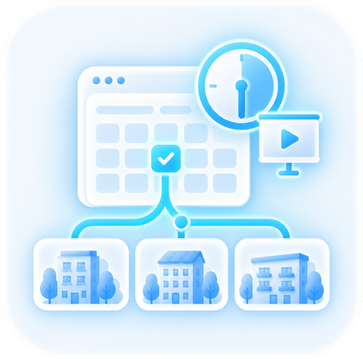
Create a repeatable acquisition onboarding workflow by ingesting property records into a centralized property database. Standardize listing templates and automate listing syndication to major portals like Zillow, Facebook Marketplace, Craigslist, Zumper, and Padmapper. Automate lead prequalification and enable a showing scheduler for qualified leads. Integrate tenant screening with fraud-detection vendors. Use digital lease & e-signatures plus standardized tenant onboarding checklists to compress the funnel from inquiry to move-in. Assign clear owners and tasking (Acquisitions: data ingest & compliance; Leasing: lead-to-lease KPIs; Regional Ops: vendor & API integrations). Conduct weekly KPI reviews focused on vacancy reduction, time-to-lease, and lead-to-lease conversion. Scaling leasing requires documented data usage policies and Fair Housing/local regs training and reliable API integrations to avoid fragmentation. The immediate next step involves running a 30-day pilot to automate listing syndication, lead prequalification, and showing scheduling on a 50-unit batch. Weekly, measure time-to-lease and lead-to-lease conversion to establish your troubleshooting baseline.Why Automating Leasing Processes Is Vital for Velocity When Adding 300 Units Annually
Automating core leasing tasks, such as listing syndication to major marketplaces, lead prequalification rules, a showing scheduler, tenant screening with fraud detection, and digital lease and e-signatures, allows teams to onboard 300 units annually without increasing headcount linearly. Automated core leasing tasks reduce vacancy days and improve the time-to-lease KPI. They also lift lead-to-lease conversion and lower per-unit operating cost when connected to a centralized property database and API integrations. Prioritize automation before hiring because adding staff scales fixed labor cost while automation scales capacity and consistency across properties (counter-intuitive insight). Standardize an acquisition onboarding workflow that includes template screening criteria, rent comps, and tenant onboarding steps so regional managers and leasing directors can delegate work through team collaboration & tasking instead of bespoke local processes. Consideration: this strategy requires clear data usage policies and documented compliance (Fair Housing & local regs) integrated with your tenant screening and communications tools.Checklist for Immediate Implementation and Key Metrics
Run a 30-day pilot that syndicates new listings to Facebook Marketplace, Zillow, Zumper/Padmapper, and Craigslist. This pilot also enforces lead prequalification (income verification and ID + fraud checks) and enables an automated showing scheduler and 24/7 inquiry responses. Issue digital leases with e-signatures and log every action in a centralized property data database with API integrations to your screening and accounting vendors. Track weekly lead-to-lease conversion and average days-to-lease. Assign one ops owner to monitor exceptions. Use team collaboration and tasking to route failed leads to leasing agents. If conversion is below target after two weeks, pull the pilot report and reduce friction by removing one input form field in the application flow. Re-run the funnel for seven days while verifying compliance checks remain intact.
Tech Stack Checklist for Property Managers Efficiently Scaling Leasing Operations by 300 Units Annually
Scaling leasing to 300 units per year requires eight core systems: listing syndication, AI lead prequalification, an automated showing scheduler, advanced tenant screening with fraud detection, a digital document builder with e-signatures, a centralized property database (PMS), a reporting dashboard, and robust API integrations. In practice you should publish listings from the centralized property database to syndication channels, capture incoming leads into the CRM and run them through prequalification rules, route qualified leads to the scheduler, trigger tenant screening and fraud checks, generate and send digital lease packages for e-sign, then update property status and tenant onboarding tasks in the central database. Configure dashboards to track vacancy reduction, time-to-lease, and lead-to-lease conversion. The platform also enables team collaboration and task assignment. Set event-driven alerts for SLA breaches. This stack requires a standardized property data model and documented data-use policies and compliance controls to meet Fair Housing and local regulations before full automation.Syndication Checklist for Operational Flow Integration
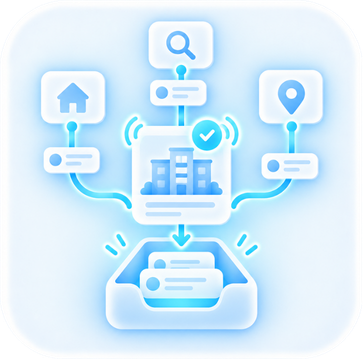
Building a master property record and API schema is necessary for syndication consistency across platforms like Facebook Marketplace, Zillow, Padmapper, and Craigslist. Then, listing fields and required photos must be mapped. Configure lead-routing rules to run AI lead prequalification within minutes and auto-tag qualified leads. Only open auto-scheduled showings for leads meeting threshold criteria, while logging all interactions for audit and compliance. Automate screening by sending applicant data to screening vendors with fraud detection. Block unit availability until screening clears, generate pre-filled digital leases and push e-signatures, and create onboarding tasks in the central database on signature completion. Feed all events to reporting for time-to-lease and lead-to-lease conversion analysis. Hidden trap: mismapped vendor fields and missing webhook error handling are manageable at small scale but cause major operational failure when onboarding 300 units/year. The immediate next step is to run an end-to-end integration smoke test using 10 sample applicants through listing, prequalification, screening, and e-sign. Also, review API logs and failed webhook events to fix mappings and retry logic.Metrics to Model for Capacity Planning
- Throughput math: 300 units/year = 25 units/month (~6.25/week), a pace that requires continuous onboarding rather than periodic hiring.
- Vacancy reduction benchmark: Leasey.AI reports 60% reduction in vacancy periods, a metric owners and portfolio managers should benchmark during integrations.
- Time savings per listing: The platform claims 20+ hours saved per listing, meaning regional managers can reallocate time to oversight, not duplicate leasing tasks.
- Lead-to-lease uplift: Use the 150% improvement in lead-to-lease ratio to model expected occupancy gains when automating prequalification and follow-up.
- Automated response ROI: A 400% increase in lead conversion from automated responses shows urgent first-touch automation scales leasing outcomes.
- Subscription baseline: Starting price $299/month with unlimited team members is cost-effective, but calculate per-unit onboarding and vendor integration costs before acquisition.
- Syndication reach: Direct syndication to Facebook Marketplace, Zillow, and partner channels reduces time-to-list and improves lead quality versus manual posting.
- Compliance scaling risk: At ~25 units/month, manual screening and paper leases become major legal exposure; automate Tenant Screening and Document Builder to control risk.

How to Design a Scalable Leasing Workflow Implementation Roadmap for 300-Unit Annual Acquisition Growth
An effective acquisition onboarding workflow should move units from pre-close to leased using specific deliverables and timelines: require a pre-close data package (unit-level inventory, current leases, rent roll, photos, floorplans, service contracts, access instructions) delivered 10–14 days before close. Create a one-page unit onboarding checklist (photo quality, amenity tags, rent/deposit, pet policy, utility responsibilities), standard listing templates, and listing syndication mappings. Codify lead prequalification rules and showing scheduler parameters so only qualified leads can book in-person or self-tour viewings. Assign clear roles—intake, listing, screening, and tenant onboarding owners—and connect a centralized property database with API integrations to tenant screening (fraud detection), lease automation, and e-signatures providers. Track vacancy reduction, time-to-lease KPI, and lead-to-lease conversion weekly and surface exceptions via team collaboration & tasking. Consideration: this approach requires clear data usage policies and standardized property data from sellers. Additionally, documented Fair Housing and local regs compliance should be embedded in listing and screening rules.Implement Phases to Maximize Efficiency
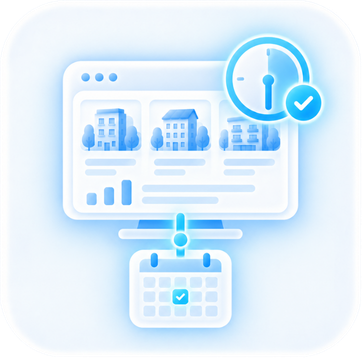
Implement the process in short phases to ensure efficiency: Phase 0 – Pre-close intake: collect the required data package and import it into the centralized property database. Phase 1 – Intake to market (7 days): complete the unit onboarding checklist, apply the standard listing template, and activate listing syndication and automated lead prequalification. Phase 2 – Qualification & showings (day 8–30): enable the showing scheduler and open self-tour options where safe. Tenant screening with fraud detection should run before sending digital lease & e-signatures. Phase 3 – Lease-up & onboarding (post-sign): automate move-in tasks, set up tenant onboarding communications, and measure time-to-lease and lead-to-lease conversion to validate templates. Counter-intuitive insight: delay full platform-wide automation until templates prove reliable in a 30-day pilot on 2–3 high-turn properties to avoid scaling broken processes. Select two pilot properties and request the pre-close package today. Schedule a 30-day measurement window to track time-to-lease and lead-to-lease conversion for template and screening rule iteration.
Organizational Design and Staffing for Balancing Hybrid Leasing Model Processes at 300-Unit Annual Scale
For a portfolio growing by roughly 300 units per year, adopt a hybrid model: centralize high-volume transactional functions (listing syndication, lead prequalification, showing scheduler, tenant screening with fraud detection, lease automation including digital lease & e-signatures, and the centralized property database with application programming interface (API) integrations) while keeping market-facing roles like regional leasing agents and property managers decentralized. Operational ownership should be explicit: a central Leasing Operations team owns syndication cadence, prequalification rulesets, screening vendor configuration, and document templates. Regional Property Managers own pricing, in‑person showings, vendor coordination, and local compliance (Fair Housing & local regs). An Acquisitions/Onboarding team manages the acquisition onboarding workflow, data imports, and integrations. Counter‑intuitively, centralize screening and scheduling early to accelerate vacancy reduction and standardize lead-to-lease conversion. Decentralize only when local market nuance or hands-on relationship management materially changes outcomes. This strategy requires clear data-usage policies and formal SLAs between central and regional teams.Determining Role Ownership
Leasing operations involve daily listing syndication, tuning lead prequalification logic, running the showing scheduler, triggering tenant screening and fraud detection, maintaining lease automation and e-signatures, and owning the centralized property database, API integrations, and cross-team tasking. Regional teams must update rents weekly and perform in-person showings. They should also execute tenant onboarding, manage vendors, certify compliance with local regulations, and handle on-site team collaboration and tasking. Train by role: require new central coordinators to complete two weeks of shadowing plus a 90‑minute SOP session. Run quarterly compliance refreshers for leasing staff and measure time-to-lease KPI and lead-to-lease conversion weekly to reassign capacity and drive vacancy reduction. Watch the hidden trap of over-automation. Set human-review thresholds for screening exceptions. Launch a 30-day pilot to centralize lead prequalification and the showing scheduler. Track those KPIs weekly, and iterate staffing and rules based on the results.Operational Advantages for AI-powered Tools
- Our AI-powered tools offer listing syndication: Automates multi-channel posting (Facebook, Zillow), freeing leasing teams and improving reach – benefit: regional managers get faster lease-up velocity.
- Lead prequalification rules: Hidden trap: skipping custom criteria wastes showings; implement prequalification to reduce unproductive tours and save on-site staff time.
- Advanced tenant screening: Integrations with Certn and Discrepancy AI detect fraud and reduce default risk – owners and risk managers see direct portfolio protection.
- Automated showing scheduler: Counter-intuitive: letting prospects self-schedule increases kept-showing rates and cuts coordination time for regional property managers.
- Document builder & e-sign: Hidden trap: manual lease errors escalate with scale; automated templates and digital signatures lower legal and compliance headaches for operations teams.
- Team collaboration & tasking: At 25 units/month, communication failures delay move-ins; in-app messaging and assignments keep regional teams aligned and accountable.
- 24/7 AI inquiry handling: With a 400% reported lead conversion lift, around-the-clock chatbots convert after-hours leads – critical for Director of Leasing targets.
- Subscription economics: Counter-intuitive: an all-features $299/month subscription with unlimited users often beats per-user SaaS fees when scaling to hundreds of units.