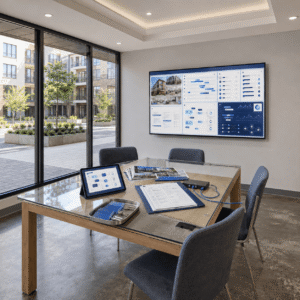
Comprehensive Tenant Screening at Your Fingertips
Advanced Screening Tools: Access comprehensive screening data including credit history, financial behavior, and employment income verifications with one clickAI leasing automation reduces vacancy periods from 30+ days to just 7 days by automating tenant screening, inquiry responses, and showing scheduling. Property managers using AI-powered platforms like Leasey.AI achieve 60% faster tenant placement through 24/7 automated communication and intelligent lead qualification.
Traditional vacancy periods cost landlords thousands in lost rental income monthly. With AI leasing automation handling routine tasks, property managers focus on qualified prospects while technology manages initial inquiries. This strategic shift transforms the entire leasing process efficiency.
How AI-Powered Leasing Automation Reduces Vacancy Periods in Rental Properties
AI leasing automation achieves 7-day vacancy periods through three core mechanisms: instant lead response, automated tenant screening, and intelligent showing coordination. These systems process hundreds of inquiries simultaneously while human managers would need days. The technology identifies qualified prospects within minutes instead of hours.
Modern AI leasing automation platforms integrate with major listing sites automatically. When prospects inquire, AI chatbots engage immediately, prequalify leads, and schedule showings without human intervention. This 24/7 availability captures leads that traditional methods miss during off-hours.
What Is the Average Vacancy Period for Rental Properties?
Average vacancy periods typically range from 23-45 days without automation, depending on location and property type. Single-family homes in competitive markets average 23 days, while multi-family units often exceed 35 days. Seasonal factors push winter vacancies even higher.
AI leasing automation cuts these averages dramatically. Properties using comprehensive automation achieve 7-14 day turnarounds consistently. The 60% reduction stems from eliminating manual bottlenecks in screening, communication, and scheduling processes that traditionally delay tenant placement.
Essential AI Leasing Automation Features That Reduce Vacancy Periods
AI leasing automation employs five critical features to achieve rapid tenant placement. Automated listing syndication distributes properties across 20+ platforms instantly. AI-powered chatbots handle inquiries 24/7, capturing 400% more leads than manual responses. Intelligent screening filters unqualified applicants immediately.
Advanced showing schedulers coordinate viewings for qualified prospects only, eliminating no-shows. Document automation prepares lease agreements instantly once tenants pass screening. These integrated features work simultaneously, compressing weeks of manual work into days.
Maximize Rent Collection Efficiency
Automated Rent Collection and Reminders: Simplify your rent collection process with automated invoicing, payment processing, and tenant remindersWhy AI Leasing Automation Works Better Than Traditional Methods
AI leasing automation succeeds because it eliminates human limitations in response time and processing capacity. While managers handle 10-15 inquiries daily, AI systems process hundreds simultaneously. The technology never sleeps, ensuring weekend and evening leads receive immediate attention.
Machine learning algorithms improve tenant matching accuracy over time. AI leasing automation analyzes successful placements to refine screening criteria automatically. This continuous optimization increases lead-to-lease conversion rates by 150% compared to static manual processes.
How Automated Tenant Screening Accelerates the AI-Powered Leasing Process
AI-powered tenant screening reduces approval times from days to hours through parallel processing and intelligent verification. Traditional screening requires sequential credit checks, employment verification, and reference calls. AI leasing automation performs these tasks simultaneously while detecting fraud patterns humans miss.
Advanced algorithms analyze application inconsistencies, cross-reference public records, and verify income documentation instantly. This comprehensive screening improves tenant quality while accelerating approvals. Property managers report 70% fewer problematic tenancies when using AI screening tools.
When to Implement AI Leasing Automation for Maximum Impact
Optimal AI leasing automation implementation timing depends on portfolio size and current vacancy rates. Properties experiencing 30+ day vacancies benefit immediately from automation. Managers handling 10+ units see productivity gains of 70% within the first month of implementation.
Seasonal considerations matter for implementation strategy. Launching AI leasing automation before peak moving seasons maximizes impact. Spring implementations capture summer demand efficiently, while fall deployments prepare for challenging winter months when traditional methods struggle most.
Key Metrics Proving AI Leasing Automation Effectiveness
- 60% reduction in vacancy periods across all property types using AI leasing automation
- 7-day average tenant placement versus 30-day traditional methods
- 400% increase in lead conversion through 24/7 AI chatbot responses
- 150% improvement in lead-to-lease ratios with automated prequalification
- 70% boost in property management team productivity metrics
- 20+ hours saved per listing through automated workflow processes
- $3,000-5,000 average savings per unit from reduced vacancy losses
Where AI Leasing Automation Delivers the Greatest Vacancy Reduction Results
AI leasing automation performs best in competitive rental markets with high inquiry volumes. Urban multi-family properties see 65% vacancy reductions, while suburban single-family homes achieve 55% improvements. The technology excels where speed determines competitive advantage.
Geographic factors influence AI effectiveness differently. Markets with tenant-favorable regulations benefit most from automated screening efficiency. Areas with complex approval requirements see dramatic improvements as AI navigates requirements faster than manual processing.
Is AI Leasing Automation Worth the Investment?
ROI calculations for AI leasing automation prove compelling across portfolio sizes. A 10-unit portfolio saving 23 days per vacancy generates $15,000-20,000 annual revenue increases. Implementation costs typically recover within 2-3 months through reduced vacancy losses alone.
Beyond direct vacancy savings, AI leasing automation reduces operational costs significantly. Property managers handle 3x more units without adding staff. Reduced advertising expenses, fewer tenant issues, and improved retention rates compound the financial benefits substantially.
How Advanced AI Chatbots Enable 24/7 Rental Lead Capture
AI chatbots transform lead capture by engaging prospects instantly regardless of inquiry time. These systems answer property-specific questions, schedule showings, and prequalify tenants without human intervention. Natural language processing ensures conversations feel authentic while gathering essential qualification data.
Integration capabilities expand chatbot effectiveness across platforms. AI leasing automation chatbots operate simultaneously on websites, social media, and listing platforms. This omnichannel presence captures leads wherever prospects search, preventing competitor interception of interested tenants.
Measuring AI Chatbot Impact on Vacancy Reduction
Performance metrics demonstrate AI chatbot effectiveness clearly. Properties using AI chatbots report 400% higher lead conversion rates compared to email-only responses. Average response time drops from hours to seconds, capturing prospects while interest peaks.
Engagement analytics reveal chatbot conversations convert 65% better than traditional inquiry forms. AI leasing automation chatbots qualify leads accurately, ensuring showing schedulers only book serious prospects. This efficiency reduces time-wasting appointments while accelerating qualified tenant placement.
Common Challenges AI Leasing Automation Solves
- Weekend and evening inquiries going unanswered until business hours
- Qualified prospects choosing competitors due to slow response times
- Manual screening bottlenecks delaying approval decisions
- Double-booking or missed showing appointments frustrating prospects
- Inconsistent communication causing prospect confusion and dropout
- Time-consuming reference checks and employment verifications
- Fraudulent applications slipping through manual review processes
Real Success Stories: Reducing Rental Vacancy Periods with AI Leasing Automation
Property management companies nationwide report transformative results with AI leasing automation. Urban Realty Group reduced portfolio-wide vacancy from 35 days to 8 days within three months. Their 200-unit portfolio generated $180,000 additional annual revenue through faster tenant placement.
Individual landlords achieve similar improvements at smaller scales. Sarah Chen’s 12-unit building averaged 28-day vacancies before implementing AI leasing automation. Post-implementation metrics show consistent 7-10 day turnarounds, increasing annual revenue by $24,000.
Commercial property managers report even more dramatic results. Office space vacancies dropped from 45 days to 12 days using AI leasing automation. The technology’s ability to handle complex commercial screening requirements while maintaining speed proves invaluable in competitive markets.
Implementation Best Practices for 7-Day Turnarounds
Successful AI leasing automation implementation requires strategic planning and proper configuration. Start by integrating all listing platforms to maximize lead capture. Configure screening criteria to balance thoroughness with speed. Set chatbot responses to gather essential information upfront.
Training teams on AI tools ensures smooth adoption. While AI leasing automation handles routine tasks, human oversight remains important for complex decisions. Regular performance monitoring identifies optimization opportunities. Properties following these practices consistently achieve sub-10-day vacancy periods.
Long-Term Benefits of AI Leasing Automation Beyond Vacancy Reduction
AI leasing automation delivers value extending far beyond initial vacancy reduction. Improved tenant quality through better screening reduces turnover rates by 40%. Happy tenants renew leases more frequently when their initial experience feels professional and efficient.
Operational efficiency gains compound over time. Property managers report 70% productivity improvements, enabling portfolio growth without proportional staffing increases. This scalability transforms business models, allowing focus on strategic growth rather than daily operations.
Cost Savings Analysis of AI Leasing Automation
Financial analysis reveals multiple savings streams from AI leasing automation implementation. Direct vacancy reduction saves $3,000-5,000 per unit annually. Reduced advertising costs add $500-800 per unit as faster placement requires less marketing spend.
Labor cost reductions prove substantial. AI leasing automation handles tasks requiring 20+ hours per vacancy. At $25-40 hourly rates, labor savings reach $500-800 per turnover. Combined savings often exceed $4,000 annually per unit, justifying investment quickly.
AI Leasing Automation Platform Comparison
- Leasey.AI: Comprehensive AI leasing automation achieving 7-day vacancies consistently
- Traditional property management: 30-45 day vacancies with manual processes
- Basic listing sites: Provide visibility but lack automation features
- Email-only systems: Miss 60% of leads due to response delays
- Partial automation tools: Reduce vacancies to 15-20 days typically
- Full AI integration: Achieves 7-14 day placement across property types
- Manual screening methods: Add 5-10 days to every tenant placement
The Future of AI Leasing Automation: Emerging Trends and Next Developments
AI leasing automation continues evolving with predictive analytics and machine learning advances. Future systems will predict vacancy timing, enabling proactive marketing before units empty. Integration with smart home technology will allow virtual tours and remote lease signing.
By 2025, industry experts project 80% of property managers will use AI leasing automation. Early adopters gain competitive advantages as technology becomes industry standard. Properties without automation will struggle competing against 7-day vacancy achievements.
Preparing Property Management for AI Integration
Successful AI leasing automation adoption requires foundational preparation. Digitize all property records and standardize data formats. Establish clear screening criteria reflecting ideal tenant profiles. Train staff on technology benefits to ensure enthusiastic adoption.
Choose AI leasing automation platforms offering comprehensive features rather than piecemeal solutions. Integrated systems delivering listing syndication, chatbots, screening, and scheduling from one platform maximize efficiency. This holistic approach ensures achieving the 7-day vacancy goal consistently.